UAE: +971 6 55 222 55 | USA: +1 (833) VSAT 123

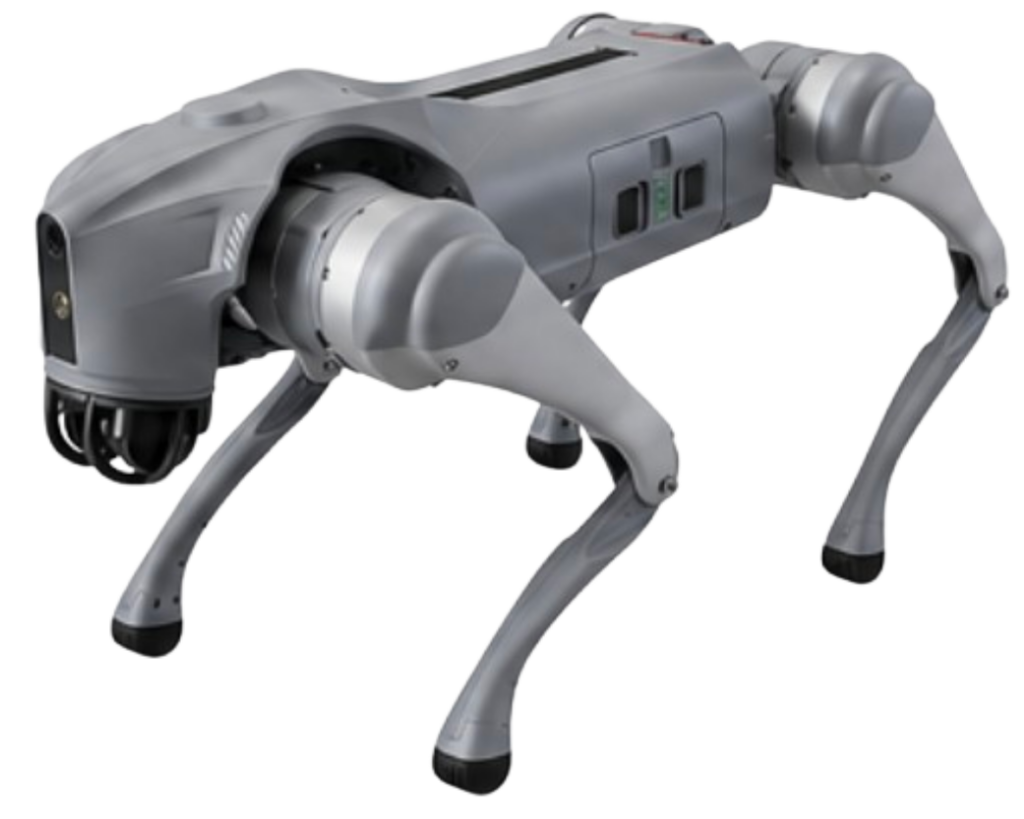
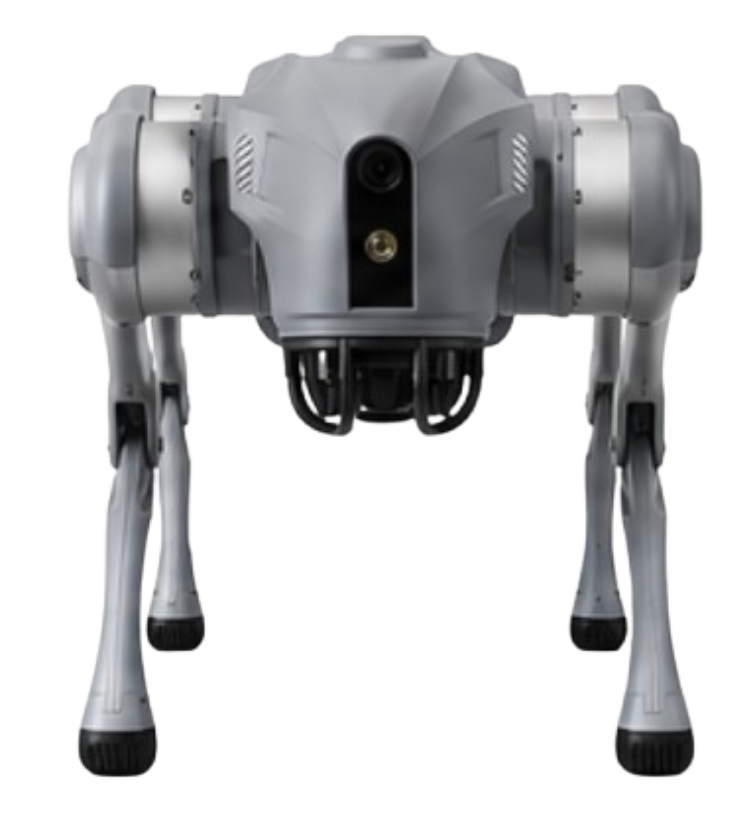
The Norsat GQR0116L Intelligent Quadruped Robot – Lite is a compact four-legged robotic platform designed to combine mobility, intelligent sensing, wireless connectivity, autonomous functions, and developer flexibility in a relatively lightweight package. As the “Lite” version of the GQR0116 family, it focuses on a practical balance between mobility, payload, computing capability, endurance, and portability.
According to the supplied Norsat datasheet, the GQR0116L weighs only 15 kg including its battery, can reach a maximum speed of 3.5 m/s, supports a maximum payload of 12 kg, and can climb angles up to 40°. It also incorporates an 8000 mAh battery, an 8-core high-performance CPU, a super-wide-angle 3D LiDAR, Wi-Fi 6, Bluetooth, a 4G module, voice functionality, intelligent side-following, intelligent detection and avoidance, and support for secondary development.
For organizations looking for a relatively compact quadruped platform for robotics development, inspection, monitoring, research, education, security, or other mobile robotic applications, the GQR0116L provides a broad set of integrated capabilities without the size and weight associated with larger industrial quadruped systems.
The GQR0116L Intelligent Quadruped Robot – Lite is a four-legged mobile robot designed to move dynamically across different environments while providing an onboard computing and sensing platform.
Unlike conventional wheeled robots, a quadruped configuration can provide greater flexibility when encountering changes in terrain, slopes, gaps, and obstacles. The GQR0116L is specified for a 40° climbing angle and a maximum climb/drop height of approximately 16 cm. Its maximum speed is listed as 0–3.5 m/s, giving the platform the ability to operate at relatively high speed for a compact robotic system.
The robot is also designed with development and intelligent-operation features rather than functioning only as a remotely controlled mechanical platform. The datasheet lists graphical programming, upgraded intelligent OTA functionality, intelligent detection and avoidance, intelligent side-following, voice functionality, and secondary development support.
This makes the GQR0116L particularly interesting for organizations that want a robotic hardware platform that can be customized for different applications.
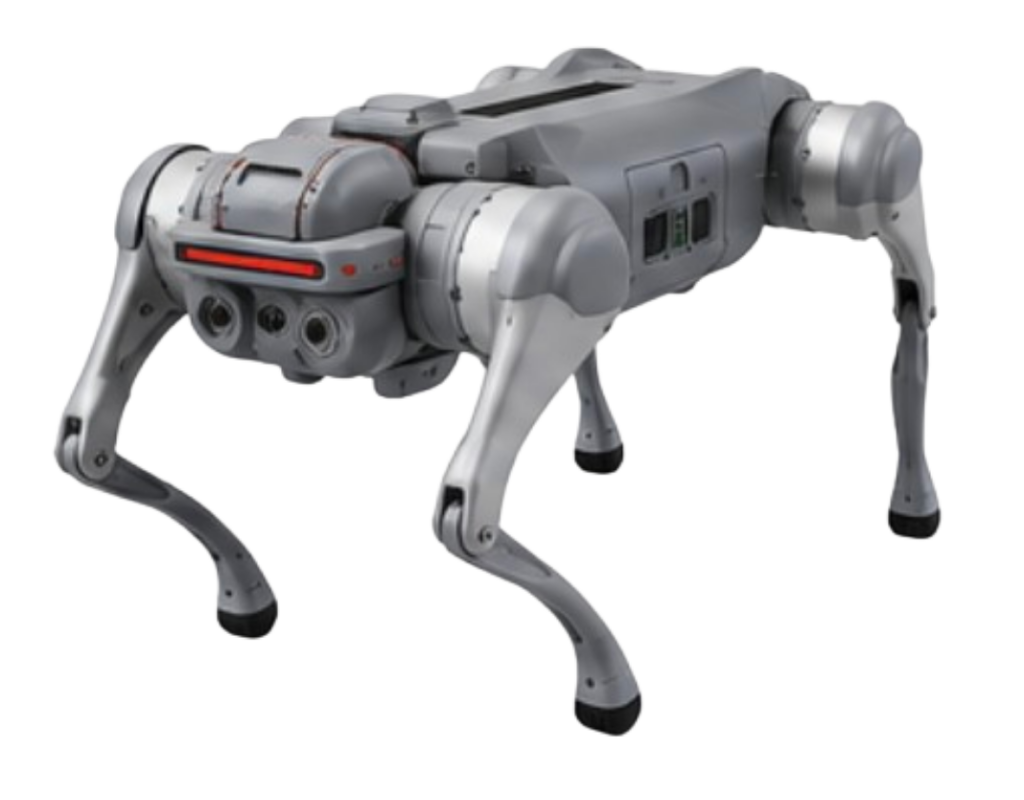
One of the most practical characteristics of the GQR0116L is its weight.
The datasheet specifies:
Product weight: 15 kg including battery
For a quadruped robot, this makes the GQR0116L comparatively easy to transport, deploy, and reposition between operational areas. The robot is constructed from aluminum alloy and high-strength engineering plastic, providing a combination of structural strength and relatively low overall weight.
Its standing dimensions are:
When lying prone, its dimensions are:
The 310 mm width is particularly useful for applications where the robot needs to operate in relatively narrow spaces.
Mobility is one of the main reasons to choose a quadruped robot.
The GQR0116L provides a maximum speed of 3.5 m/s, while its climbing angle is specified at 40°. The datasheet also specifies a maximum climb/drop height of approximately 16 cm.
This combination allows the robot to navigate environments that may be difficult for small conventional wheeled platforms.
Potential applications include:
These are potential application areas based on the robot’s documented mobility and sensing capabilities; the datasheet itself does not prescribe a specific application list.
The GQR0116L supports a maximum payload of:
12 kg
This is significant considering the robot’s own weight is only 15 kg including its battery.
Payload capability gives integrators flexibility to add equipment or mission-specific hardware.
Depending on the final configuration and application requirements, this capacity can potentially accommodate additional sensors, communication equipment, cameras, computing hardware, or other robotic payloads.
However, the 12 kg figure should be treated as the manufacturer’s maximum payload specification, rather than an indication that every payload configuration will maintain maximum speed, climbing performance, and battery endurance simultaneously.
The GQR0116L includes an:
8-core high-performance CPU
This onboard processing capability supports the robot’s intelligent functions and provides a foundation for software-based robotic applications.
The platform also supports secondary development, which is important for organizations that want to build their own applications instead of relying exclusively on the robot’s standard functions.
For developers, this opens the door to applications involving:
The exact software development environment and APIs are not specified in the supplied two-page datasheet, so customers requiring detailed SDK or programming documentation should confirm those requirements before purchasing.

One of the most important sensing features listed by Norsat is:
Super-wide-angle 3D LiDAR included
LiDAR provides three-dimensional environmental information and can be an important component of robotic perception and navigation systems.
For a mobile quadruped, 3D spatial information can potentially support functions such as:
The datasheet specifically lists intelligent detection and avoidance among the platform’s features.
The supplied documentation does not provide the LiDAR’s exact range, point density, scanning frequency, or angular resolution, so those specifications should be requested separately if they are important to a project.
The GQR0116L includes intelligent detection and avoidance as part of its listed feature set.
Combined with the integrated 3D LiDAR, this provides the foundation for robotic operation in environments containing obstacles.
For practical deployments, this can reduce dependence on completely manual operation and potentially allow the robot to react to its surroundings.
The exact autonomy level, navigation algorithm, obstacle-detection range, and avoidance performance are not specified in the supplied datasheet, so these should be validated against the intended use case before deployment.
Another notable feature is the:
ISS 2.0 intelligent side-follow system
This function is designed around intelligent following behavior and can be useful in scenarios where the robot needs to accompany or track an operator.
Potential applications include:
Again, the datasheet identifies the function but does not provide detailed tracking distance, accuracy, or maximum following speed.
The GQR0116L provides a broad range of communication options.
The datasheet lists:
This connectivity makes the platform suitable for environments where wireless control, data transfer, remote monitoring, or cloud-connected applications are required.
Wi-Fi 6 can provide a modern high-speed wireless connection, while the integrated 4G module can provide an alternative connectivity path where appropriate cellular service is available.
The datasheet does not specify the exact cellular bands supported by the 4G module, so those should be confirmed for the deployment country.
The GQR0116L also includes a voice function.
While the supplied datasheet does not provide details regarding microphone configuration, speaker output, audio range, or supported voice protocols, the feature can be useful for human-machine interaction and remote communication applications.
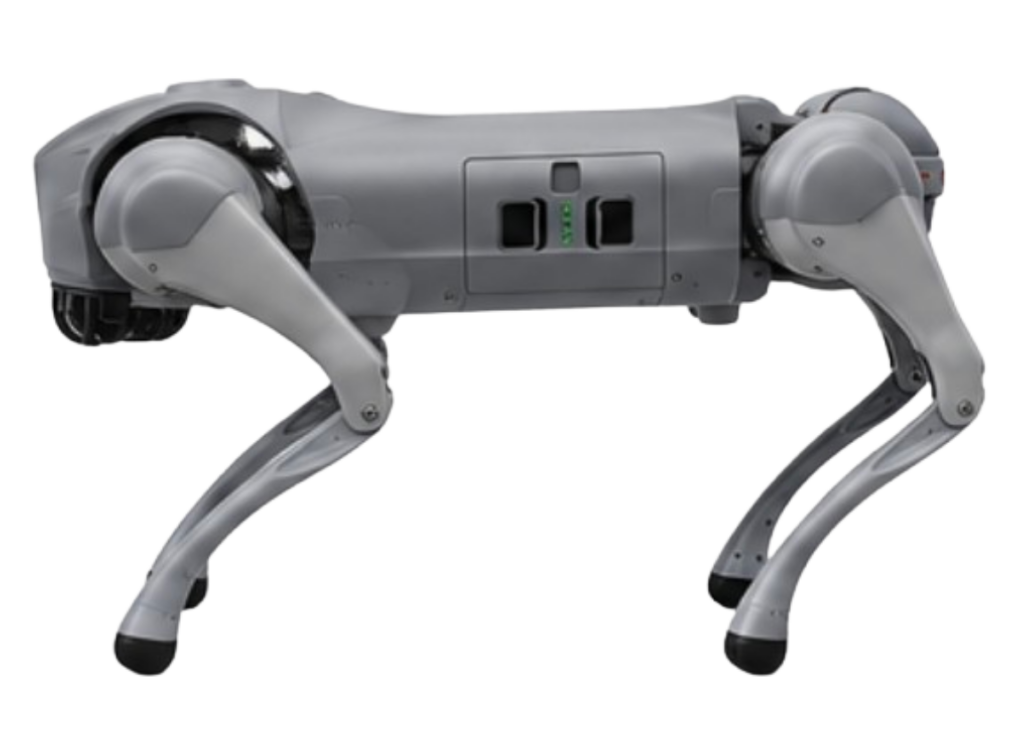
The GQR0116L uses an 8000 mAh battery with a specified voltage range of:
28–33.6 V
The datasheet specifies battery life of approximately:
1–2 hours
The robot supports fast charging using a:
33.6 V / 9 A charger
Its maximum working power is listed as:
3000 W
Battery performance will naturally vary according to operating speed, terrain, payload, sensing workload, wireless communication, computing requirements, and movement patterns.
Therefore, the 1–2 hour figure should be considered the manufacturer’s stated battery-life specification rather than a guaranteed operating time under every mission profile.
The GQR0116L uses 12 aluminum knee-joint motors.
The datasheet specifies a maximum joint torque of:
45 N·m
The robot’s range of motion is divided into three areas:
| Mechanical Parameter | Specification |
|---|---|
| Body Range of Motion | -48° to 48° |
| Shank Range of Motion | -156° to -48° |
| Thigh Range of Motion | -200° to 90° |
| Maximum Joint Torque | 45 N·m |
| Aluminum Knee Joint Motors | 12 sets |
These specifications provide an indication of the mechanical articulation available to the platform and help explain its ability to move using a quadruped gait rather than relying on conventional wheels.
For outdoor and industrial robotics, environmental protection is a critical consideration.
The GQR0116L has an:
IP67 rating
This indicates that the product has a high level of protection against dust ingress and water exposure according to the IP classification system.
The supplied datasheet does not specify an operating-temperature range for the GQR0116L. Therefore, no specific temperature range should be assumed without confirmation from the manufacturer.
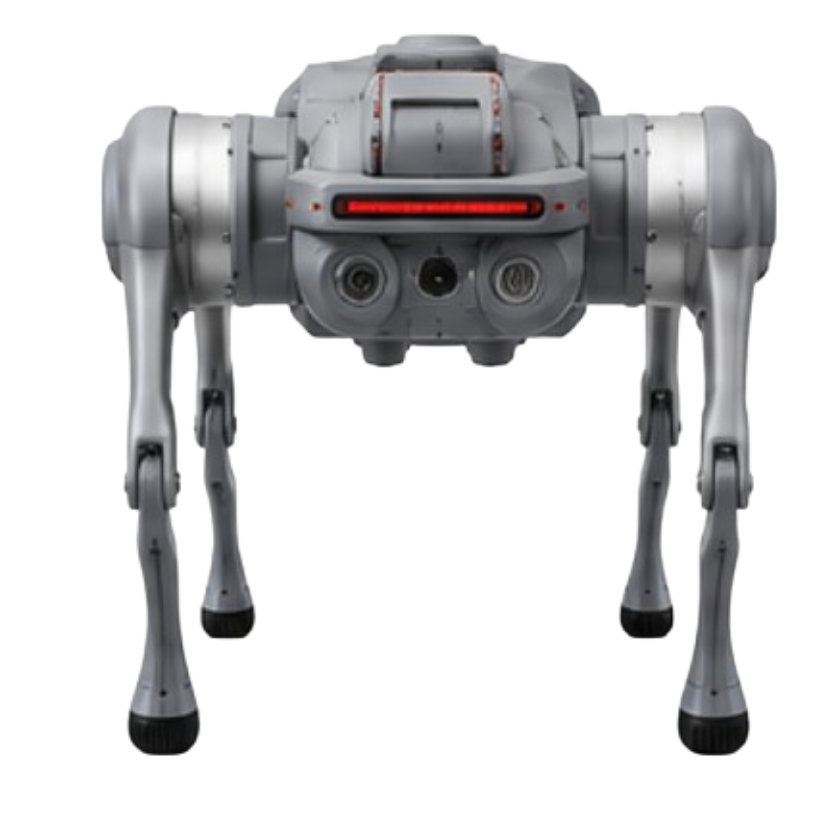
The following table summarizes the main physical characteristics documented by Norsat:
| Specification | GQR0116L |
|---|---|
| Product Type | Intelligent Quadruped Robot – Lite |
| Product Weight | 15 kg, battery included |
| Standing Height | 400 mm |
| Standing Length | 700 mm |
| Standing Width | 310 mm |
| Lying Prone Height | 200 mm |
| Lying Prone Length | 760 mm |
| Lying Prone Width | 310 mm |
| Material | Aluminum alloy + high-strength engineering plastic |
| Maximum Joint Torque | 45 N·m |
| Knee Joint Motors | 12 sets |
| IP Rating | IP67 |
| Category | Specification |
|---|---|
| Model | GQR0116L |
| Product | Intelligent Quadruped Robot – Lite |
| Maximum Speed | 0–3.5 m/s |
| Climbing Angle | 40° |
| Maximum Climb/Drop Height | About 16 cm |
| Maximum Payload | 12 kg |
| Battery Life | 1–2 hours |
| Battery Capacity | 8000 mAh |
| Battery Voltage | 28–33.6 V |
| Charger | Fast charge, 33.6 V / 9 A |
| Maximum Working Power | 3000 W |
| Computing | 8-core high-performance CPU |
| LiDAR | Super-wide-angle 3D LiDAR included |
| Joint Torque | 45 N·m max. |
| Knee Joint Motors | 12 sets |
| Material | Aluminum alloy + high-strength engineering plastic |
| IP Rating | IP67 |
| Wi-Fi | Wi-Fi 6, dual-band |
| Bluetooth | 5.2 / 4.2 / 2.1 |
| Cellular | 4G module |
| Voice | Supported |
| Side-Follow | ISS 2.0 intelligent side-follow |
| Programming | Graphical programming |
| OTA | Upgraded intelligent OTA |
| Detection | Intelligent detection and avoidance |
| Development | Secondary development |
| Controller | Manual controller |
| Charging | Charging pile compatibility |
| Standing Dimensions | 700 × 310 × 400 mm |
| Lying-Prone Dimensions | 760 × 310 × 200 mm |
| Weight | 15 kg including battery |
The GQR0116L goes beyond basic robotic movement by incorporating several software-oriented features.
The manufacturer’s feature list includes:
Basic action, upgraded intelligent OTA, RTT 2.0 pictures transaction, graphical programming, front lamp, Wi-Fi 6, Bluetooth, 4G, voice function, ISS 2.0 intelligent side-follow system, intelligent detection and avoidance, charging-pile compatibility, secondary development, and manual controller.
This combination makes the GQR0116L interesting not only as an end-use robot but also as a development platform.
For companies working on robotics, AI, autonomous navigation, computer vision, or human-machine interaction, the ability to perform secondary development can be more valuable than simply having a robot with predefined functions.
Although the supplied datasheet does not define a fixed application list, the documented capabilities suggest several potential use cases.
The combination of quadruped mobility, LiDAR, intelligent detection, and wireless connectivity can make the GQR0116L suitable for robotic inspection concepts.
It can potentially be equipped or configured for monitoring industrial environments, infrastructure, facilities, or equipment.
Its autonomous and side-following functions can potentially support mobile monitoring applications where a robot needs to move around an area rather than remain fixed in one location.
The 8-core CPU, graphical programming, secondary development support, LiDAR, Wi-Fi 6, Bluetooth, and 4G make the platform relevant to research and development projects.
The compact size and 15 kg weight can make the platform easier to deploy in robotics laboratories, technical training environments, and development centers.
The combination of onboard computing and 3D LiDAR provides a hardware foundation for experimenting with perception, navigation, obstacle avoidance, and other intelligent robotics functions.
The strongest advantages of the GQR0116L are its combination of mobility and intelligence in a relatively compact platform.
At only 15 kg including the battery, the robot is comparatively easy to transport.
A maximum speed of 3.5 m/s and 40° climbing angle provide useful mobility for a compact quadruped.
norsat_GQR0116L_Rev_A_68cbbbb75d512.pdf
The included super-wide-angle 3D LiDAR provides an important perception capability.
Wi-Fi 6, dual-band connectivity, Bluetooth, and a 4G module provide multiple communication options.
Graphical programming and secondary development support make the platform useful for developers and integrators.
ISS 2.0 side-following and intelligent detection and avoidance expand the platform beyond simple manual control.
The IP67 rating makes the robot suitable for applications requiring significant environmental protection.

The Norsat datasheet provides the following logistics information:
| Logistics Specification | Details |
|---|---|
| HS Code | 8543709990 |
| Country of Origin | Made in China |
| Ex Works | Hong Kong |
| ECCN | EAR99 |
| Unit Package | Not specified in supplied document |
For international procurement, customers should confirm the final packaging dimensions, shipping weight, battery transportation requirements, and destination-specific import requirements before placing an order.
For companies, integrators, laboratories, and organizations looking for a compact intelligent quadruped robot, the Norsat GQR0116L Intelligent Quadruped Robot – Lite offers a practical combination of mobility, sensing, computing, connectivity, and development capabilities.
VSATPlus offers the Norsat GQR0116L for customers looking to source advanced robotic and communication technology.
Whether your requirement is for robotic development, inspection, monitoring, research, AI experimentation, or a customized robotic project, VSATPlus can assist with product procurement and availability.
Before ordering, customers should specify their intended application and any requirements related to software development, connectivity, payload, sensing, or deployment environment.
Contact VSATPlus for pricing, availability, and ordering information.
The Norsat GQR0116L Intelligent Quadruped Robot – Lite is a compact robotic platform designed around a combination of mechanical mobility and intelligent functionality.
With a 15 kg total weight, 12 kg maximum payload, 3.5 m/s maximum speed, 40° climbing angle, and approximately 16 cm maximum climb/drop height, the platform provides a strong mobility package for its size. Its 8000 mAh, 28–33.6 V battery, fast charging capability, and 1–2 hour specified battery life support mobile operation, while its 3000 W maximum working power provides substantial electrical capacity for the system.
From an intelligence and connectivity perspective, the platform includes an 8-core high-performance CPU, super-wide-angle 3D LiDAR, Wi-Fi 6, Bluetooth, 4G, voice functionality, graphical programming, intelligent OTA, intelligent detection and avoidance, ISS 2.0 side-following, charging-pile compatibility, and secondary development support.
Its aluminum alloy and high-strength engineering-plastic construction, 12 aluminum knee-joint motors, 45 N·m maximum joint torque, and IP67 protection further position it as a capable compact robotic platform.
For organizations that need a smaller, lighter quadruped robot without giving up intelligent sensing, wireless connectivity, and development flexibility, the GQR0116L is a compelling platform to evaluate.
The Norsat GQR0116L is available through VSATPlus. Contact VSATPlus today for pricing, availability, and ordering information.