UAE: +971 6 55 222 55 | USA: +1 (833) VSAT 123

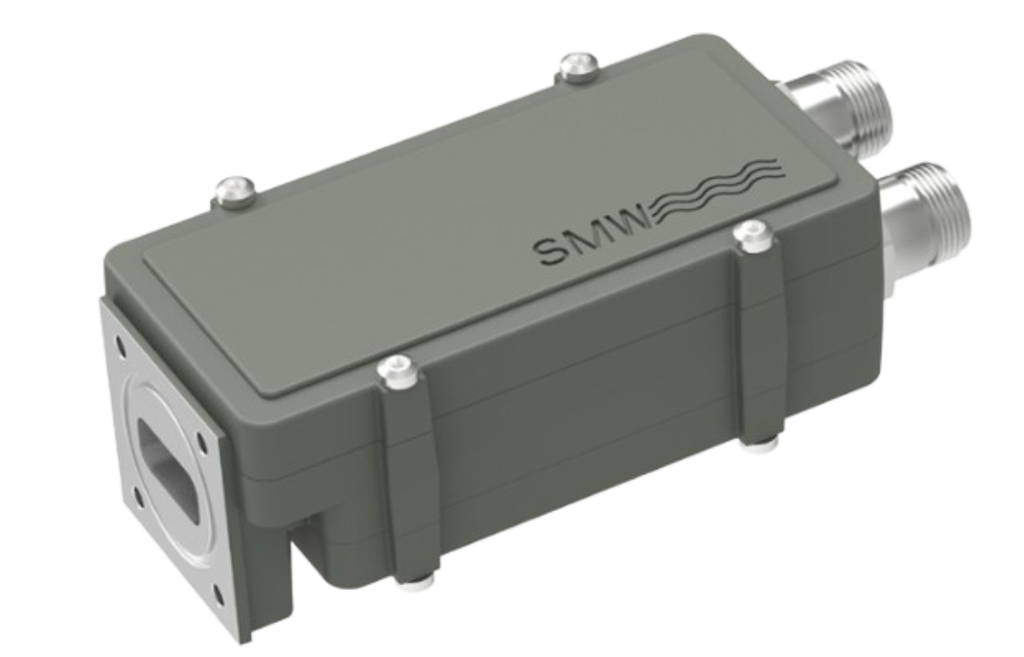
The SMW Ku LNB 10.70–12.75 GHz WDL ULP Dual & Quattro from Swedish Microwave AB (SMW) is a professional-grade Ku-band Low Noise Block (LNB) designed for demanding satellite reception applications where frequency flexibility, low phase noise, high linearity, and reliable operation are critical.
The product is engineered for simultaneous Low- and High-band reception and is available in both Dual LNB and Quattro LNB configurations. Model E provides full 10.70–12.75 GHz Ku-band coverage, while Model B covers 10.95–12.75 GHz. Ultra Low Phase Noise (ULP) is included as standard, making the LNB particularly suitable for advanced DVB-S2X, DVB-S2, NS3, and NS4 reception environments.
For professional satellite operators, broadcasters, teleport providers, VSAT networks, and high-performance satellite reception systems, the combination of wide Ku-band coverage, simultaneous Low/High-band reception, high linearity, stable frequency reference options, and ULP performance makes this SMW LNB a highly flexible solution.
VSATPLUS offers the SMW Ku LNB 10.70–12.75 GHz WDL ULP Dual & Quattro for customers looking for professional satellite communication and reception equipment. Contact VSATPLUS for product configuration, pricing, availability, and ordering.
An LNB is one of the most important components in a satellite reception chain. Installed at the antenna feed, it receives the high-frequency satellite signal and converts it to a lower Intermediate Frequency (IF) that can be transported to a satellite receiver, modem, IRD, spectrum analyzer, or other downstream equipment.
The SMW WDL ULP is designed specifically for applications where conventional LNB performance may not be sufficient. Its architecture supports simultaneous reception of Low and High Ku-band frequencies, allowing professional systems to access a broad range of Ku-band services without requiring separate LNB configurations for each sub-band.
According to the manufacturer, Model E covers 10.70–12.75 GHz, while Model B covers 10.95–12.75 GHz. The product uses different local oscillator frequencies for the Low and High bands, enabling the corresponding RF spectrum to be translated into usable L-band IF ranges.
The product is available as a Dual LNB with Low- and High-band outputs or as a Quattro LNB supporting both Horizontal and Vertical polarization. The Quattro version can also be supplied with an OMT and weather protection case.
One of the biggest advantages of this product is its broad frequency coverage. Model E supports the complete 10.70–12.75 GHz Ku-band, while Model B supports 10.95–12.75 GHz. This makes the LNB suitable for a wide range of satellite frequency plans and professional reception requirements.
The WDL architecture provides simultaneous Low- and High-band reception. For Model E, the Low band is 10.70–11.70 GHz and the High band is 11.70–12.75 GHz.
This architecture is particularly valuable in professional systems where different services or transponders occupy different portions of the Ku-band and the operator needs access to both ranges.
The product’s Ultra Low Phase Noise (ULP) performance is one of its most important features.
The manufacturer specifically identifies ULP as suitable for demanding applications including:
This makes the LNB particularly attractive for modern high-efficiency satellite networks where phase noise can have a direct impact on the ability of the receiving system to demodulate advanced modulation schemes.
The LNB provides a minimum +12 dBm output P1dB and +22 dBm output IP3. These characteristics provide strong linearity and help the device operate effectively in demanding RF environments.
Depending on the selected configuration, the LNB can operate with an internal frequency reference of ±1 ppm or use an external 10 MHz reference.
For professional installations where frequency synchronization is important, the external reference option provides additional flexibility for integrating the LNB into a synchronized satellite infrastructure.
The SMW product is available in different configurations to accommodate different satellite system architectures.
The Dual configuration provides separate Low-band and High-band outputs. This is useful when the receiving system needs direct access to both frequency ranges.
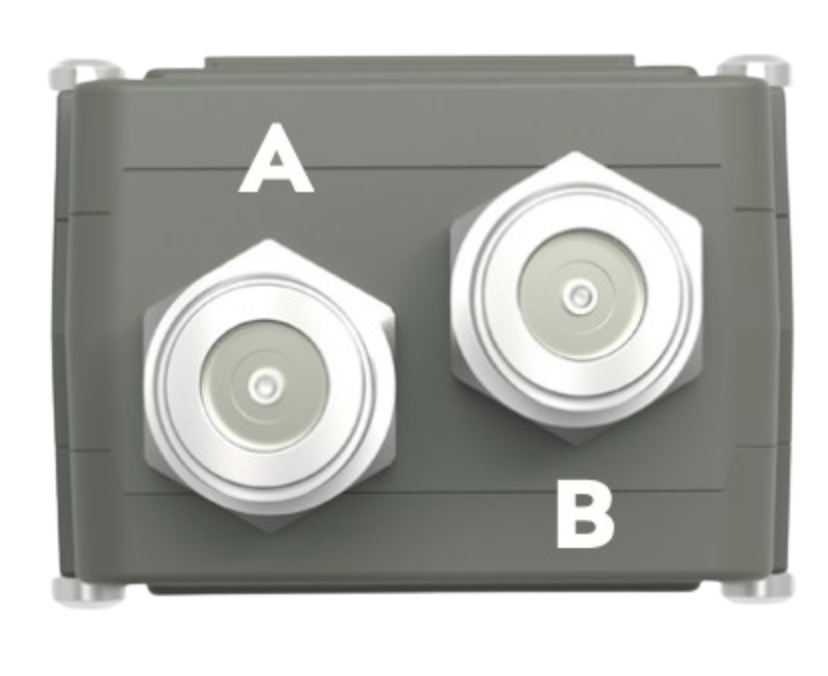
The standard connector arrangement provides a Low-band RF output and a High-band RF output, while the connector configuration can be specified as F female, N female, or SMA female depending on the required version.
For more complex professional installations, the product is available as a Quattro LNB for both Horizontal and Vertical polarization.
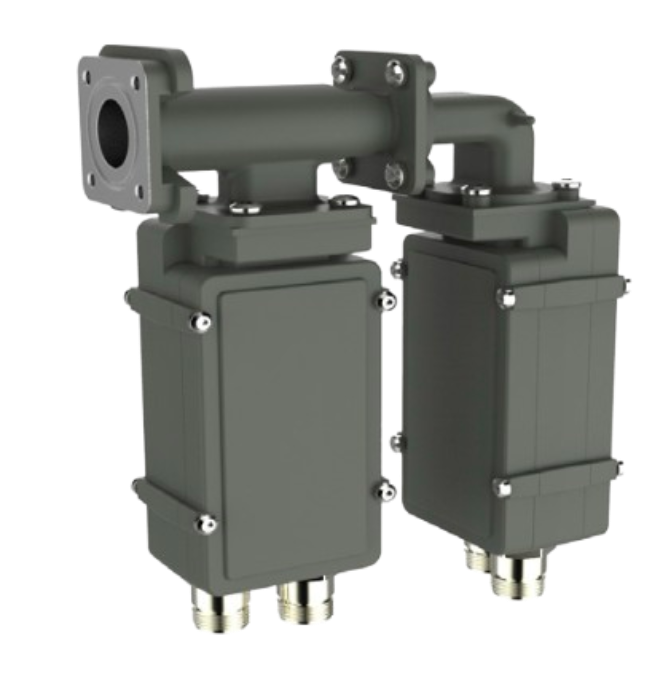
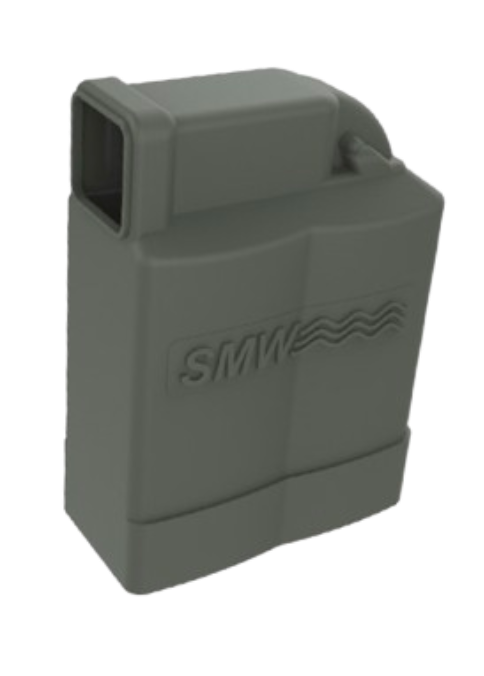
The Quattro version can include an OMT and weather protection case, making it suitable for professional antenna feed assemblies and multi-polarization distribution systems. The manufacturer’s specifications list a minimum cross-polarization performance of 31.5 dB.
The technical drawing on page 3 of the datasheet also shows the physical configuration of the Dual LNB and the larger Quattro assembly with its weather protection case.
The following table summarizes the technical specifications provided by Swedish Microwave for the SMW Ku LNB 10.70–12.75 GHz WDL ULP Dual & Quattro.
| Parameter | Model E | Model B |
|---|---|---|
| Input Frequency | 10.70–12.75 GHz | 10.95–12.75 GHz |
| LO Frequency | 9.75 & 10.60 GHz | 10.00 & 10.75 GHz |
| Low / High Band | 10.70–11.70 / 11.70–12.75 GHz | 10.95–11.70 / 11.70–12.75 GHz |
| Input Waveguide | WR75 / R120 | WR75 / R120 |
| Input Flange | PBR120 with M4 thread | PBR120 with M4 thread |
| Input VSWR | 2.3:1 max. | 2.3:1 max. |
| Input Max Power | 0 dBm instantaneous | 0 dBm instantaneous |
| DC Input | +15 to +24 V | +15 to +24 V |
| Power Consumption | 5 W typ. | 5 W typ. |
| Gain | 60 dB typ., 55 dB min. | 60 dB typ., 55 dB min. |
| Gain Variation over 24h | ±0.1 dB @ 23°C | ±0.1 dB @ 23°C |
| Gain Flatness | ±0.25 dB within 30 MHz; ±2 dB over band | ±0.25 dB within 30 MHz; ±2 dB over band |
| Internal LO Reference | ±1 ppm max., -40 to +80°C | ±1 ppm max., -40 to +80°C |
| External 10 MHz Reference | -10 to +10 dBm | -10 to +10 dBm |
| Out-of-Band Rejection | 20 dB min. | 20 dB min. |
| LO Leakage | -60 dBm max. at waveguide input; -40 dBm max. at IF output | Same |
| Group Delay | ±1 ns max. | ±1 ns max. |
| Image Rejection | 40 dB typ. | 40 dB typ. |
| Noise Figure @ 23°C | 0.8 dB / 59 K typ. | 0.8 dB / 59 K typ. |
| Phase Noise | -35 dBc @ 10 Hz to -120 dBc @ >1 MHz typ. | Same |
| Low-Band Output Frequency | 950–1950 MHz | 950–1700 MHz |
| High-Band Output Frequency | 1100–2150 MHz | 950–2000 MHz |
| Output P1dB | +12 dBm min. | +12 dBm min. |
| Output IP3 | +22 dBm min. | +22 dBm min. |
| Output VSWR | 1.7:1 typ. | 1.7:1 typ. |
| Output Connectors | F female 75Ω / N female 50Ω / SMA female 50Ω | F female 75Ω / N female 50Ω / SMA female 50Ω |
| Temperature Range | -40°C to +80°C | -40°C to +80°C |
| Dimensions | 122 × 57 × 46 mm (F/SMA); 128 × 57 × 46 mm (N) | Same |
| Weight | 335 g (F/SMA); 371 g (N) | Same |
| MTBF – Ground Fixed | >245,000 hours | >245,000 hours |
| MTBF – Airborne | >122,000 hours | >122,000 hours |
The manufacturer’s specifications are stated as typical values and may vary according to the specific part number and configuration.
For professional satellite reception, specifications such as gain and noise figure are only part of the picture. Phase noise, gain flatness, linearity, image rejection, and group delay can all influence overall system performance.
The SMW WDL ULP provides 60 dB typical gain and 55 dB minimum gain, with gain variation over 24 hours specified at only ±0.1 dB at 23°C. Gain flatness is specified at ±0.25 dB maximum within 30 MHz and ±2 dB maximum over the band.
The typical noise figure is 0.8 dB / 59 K at 23°C, providing the low-noise characteristics expected from a professional Ku-band LNB. Image rejection is specified at 40 dB typical, while out-of-band rejection is 20 dB minimum.
The phase-noise specification extends from -35 dBc at 10 Hz through -65 dBc at 100 Hz, -82 dBc at 1 kHz, -94 dBc at 10 kHz, -98 dBc at 100 kHz, and -120 dBc at frequencies above 1 MHz, typical.
These characteristics are particularly relevant in systems using advanced modulation and high spectral-efficiency satellite transmission standards.

The two models provide different IF output ranges based on their Low- and High-band frequency plans.
For Model E, the Low-band IF output is 950–1950 MHz, while the High-band IF output is 1100–2150 MHz.
For Model B, the Low-band IF output is 950–1700 MHz, while the High-band output is 950–2000 MHz.
This flexibility allows system designers to select the appropriate LNB configuration according to the downstream receiver, modem, distribution equipment, or satellite frequency plan.
The SMW WDL ULP supports several professional connector configurations.
The output connectors can be specified as:
The product uses a WR75 / R120 input waveguide with a PBR120 flange and M4 thread.
The manufacturer also offers an option for DC and 10 MHz input at the Low-band output connector, depending on the selected configuration.
Professional satellite equipment often needs to operate outdoors and in environments where temperature can vary considerably.
The SMW WDL ULP is specified for both storage and operation from -40°C to +80°C (-40°F to +176°F).
The manufacturer’s MTBF figures are also substantial. Under MIL-HDBK-217F Notice 2, the datasheet specifies more than 245,000 hours for Ground Fixed environmental conditions and more than 122,000 hours for Airborne, Inhabited, Cargo conditions.
The standard unit includes an enclosed conductive O-ring and M4 × 10 mounting screws, supporting its professional installation design.
The standard Dual WDL LNB has compact dimensions of 122 × 57 × 46 mm for F and SMA connector versions, or 128 × 57 × 46 mm for the N connector version.
Weight is approximately 335 g for F/SMA versions and 371 g for N versions.
For the Quattro configuration, the datasheet specifies dimensions of 205 × 152 × 83 mm, with weight of 1162 g for F connectors and 1231 g for N connectors.
The product’s technical drawing also illustrates the compact Dual LNB and the larger Quattro weather-protected configuration, helping integrators understand the physical installation requirements.
Model E covers 10.70–12.75 GHz, providing broad Ku-band coverage from a single professional LNB architecture.
ULP is standard rather than an optional upgrade, making the product suitable for advanced DVB-S2X and other demanding satellite applications.
The architecture provides dedicated Low- and High-band outputs, simplifying system design where both sections of the Ku-band are required.
With 60 dB typical gain, 0.8 dB typical noise figure, +12 dBm P1dB and +22 dBm IP3, the product provides strong RF performance for professional applications.
Users can select versions supporting an external 10 MHz reference or an internal ±1 ppm reference.
The availability of Dual and Quattro versions allows the same product family to serve different satellite antenna and distribution architectures.
Operation from -40°C to +80°C makes the LNB suitable for demanding outdoor installations.
F, N, and SMA connector options allow the product to be configured for different system requirements.
The SMW Ku LNB 10.70–12.75 GHz WDL ULP Dual & Quattro can be used in a wide range of professional satellite applications, including:
The wide Ku-band coverage and low phase noise make the LNB suitable for professional VSAT infrastructure where stable and high-quality satellite reception is required.
The Dual and Quattro configurations can be integrated into larger gateway and teleport architectures, particularly where multiple bands and polarizations must be handled.
The ULP performance is valuable for broadcast and professional media distribution systems using advanced DVB-S2 and DVB-S2X modulation schemes.
The manufacturer specifically identifies the product as suitable for DVB-S2X professional profiles, including all MODCODs and symbol rates under its ULP recommendations.
Ku_LNB_10.70-12.75_GHz_WDL_ULP_Dual_and_Quattro_rev2601.pdf
Applications using 16APSK or higher modulation types can benefit from the product’s ULP characteristics and RF performance.
The wide frequency coverage, external reference capability, and multiple connector options make the LNB suitable for professional monitoring and satellite RF infrastructure.
The Quattro configuration is designed for applications requiring both Horizontal and Vertical polarization, with an OMT and weather protection available as part of the configuration.
Selecting the correct LNB for a professional satellite system is not simply a matter of choosing a frequency range. The correct combination of Ku-band coverage, LO configuration, IF range, connector type, reference option, polarization, gain, and application requirements needs to be considered.
VSATPLUS provides access to professional satellite communication products such as the SMW Ku LNB 10.70–12.75 GHz WDL ULP Dual & Quattro, helping customers select the appropriate configuration for their specific system.
Whether you need the Dual WDL LNB for Low/High-band reception or the Quattro version with OMT and weather protection for a multi-polarization professional antenna system, VSATPLUS can assist with product selection and ordering.
The SMW product documentation also notes that specific part-number specifications should be confirmed, since technical specifications can vary by configuration.

The SMW Ku LNB 10.70–12.75 GHz WDL ULP Dual & Quattro is a powerful solution for professional satellite reception applications requiring wide Ku-band coverage, simultaneous Low/High-band reception, ultra-low phase noise, high linearity, stable frequency references, and flexible Dual or Quattro configurations.
With its combination of 60 dB typical gain, 0.8 dB typical noise figure, +12 dBm P1dB, +22 dBm IP3, 40 dB typical image rejection, ±1 ppm internal reference option, external 10 MHz reference capability, and -40°C to +80°C operating range, it is designed to meet the requirements of demanding professional satellite systems.
VSATPLUS has the SMW Ku LNB 10.70–12.75 GHz WDL ULP Dual & Quattro available for professional satellite communication applications.
👉 Contact VSATPLUS today for pricing, availability, configuration assistance, and ordering.
VSATPLUS — Professional Satellite Communication Products & Solutions.