UAE: +971 6 55 222 55 | USA: +1 (833) VSAT 123

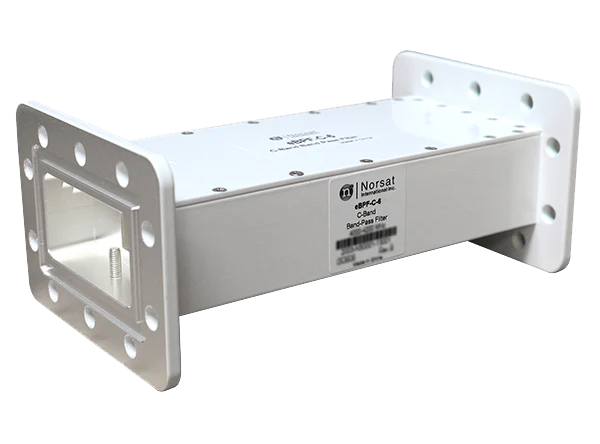
The satellite communications industry is undergoing a major transformation as terrestrial wireless networks continue expanding globally. While this growth improves mobile connectivity, it has also introduced a serious challenge for satellite operators—terrestrial interference in C-Band frequencies.
Modern C-Band satellite systems operating in teleports, gateways, broadcasters, enterprise VSAT infrastructures, and government communication networks increasingly face interference from nearby terrestrial transmitters, including 5G deployments, radar systems, and C-Band wireless communications.
To address this challenge, the Norsat eBPF-C Series C-Band Extreme Band Pass Filter was engineered as a professional-grade interference mitigation solution that protects satellite reception performance while preserving signal integrity.
The Norsat eBPF-C Series is designed to reject terrestrial interference while maintaining excellent satellite signal performance through a narrow guard band of less than 20 MHz. The product is designed to be installed between the feed and LNB and supports professional C-Band deployments requiring stable and uninterrupted satellite performance.
At VSATplus, organizations can order the Norsat eBPF-C Series with expert technical consultation, deployment guidance, and support for professional satellite infrastructure projects.
For decades, C-Band satellite systems were trusted because of their resilience to rain fade and strong reliability in harsh environmental conditions.
C-Band is widely used for:
However, recent terrestrial spectrum reuse has introduced new challenges.
Wireless carriers and terrestrial systems increasingly operate near portions of C-Band frequencies, creating interference risks.
Common interference sources include:
These signals may overload sensitive LNB systems and reduce satellite reception quality.
Consequences often include:
The Norsat eBPF-C Series is designed specifically to solve these issues.
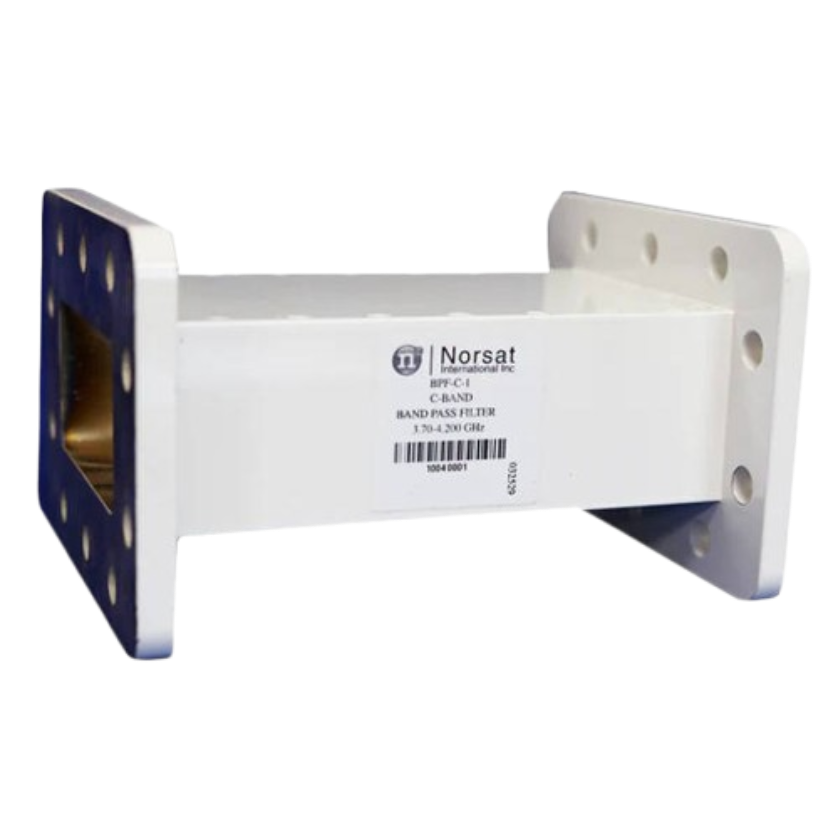
The eBPF-C (Extreme Band Pass Filter) is a professional microwave component engineered for C-Band satellite systems.
Its core purpose is simple:
Allow satellite frequencies to pass while aggressively rejecting unwanted interference signals.
The filter offers:
According to the datasheet, the filter rejects terrestrial interference caused by:
The strongest selling point of the eBPF-C Series is interference rejection.
As 5G deployments increase worldwide, satellite operators increasingly experience signal contamination.
The eBPF-C Series helps prevent:
The filter provides:
This dramatically improves reception reliability.
Unlike traditional filters requiring wide guard bands, the eBPF-C uses:
<20 MHz guard band performance
Benefits include:
This becomes especially important in high-capacity satellite environments.
A filter should not degrade desired signals.
The eBPF-C Series minimizes signal loss with:
Insertion loss: 1.4 dB maximum across supported bands.
Advantages:

VSWR is critical for signal integrity.
The Norsat filter provides:
1.4 : 1 maximum VSWR
Benefits:
Group delay affects signal consistency.
The eBPF-C Series supports:
3.0 ns maximum group delay variation within ±0.5 MHz
This helps preserve:
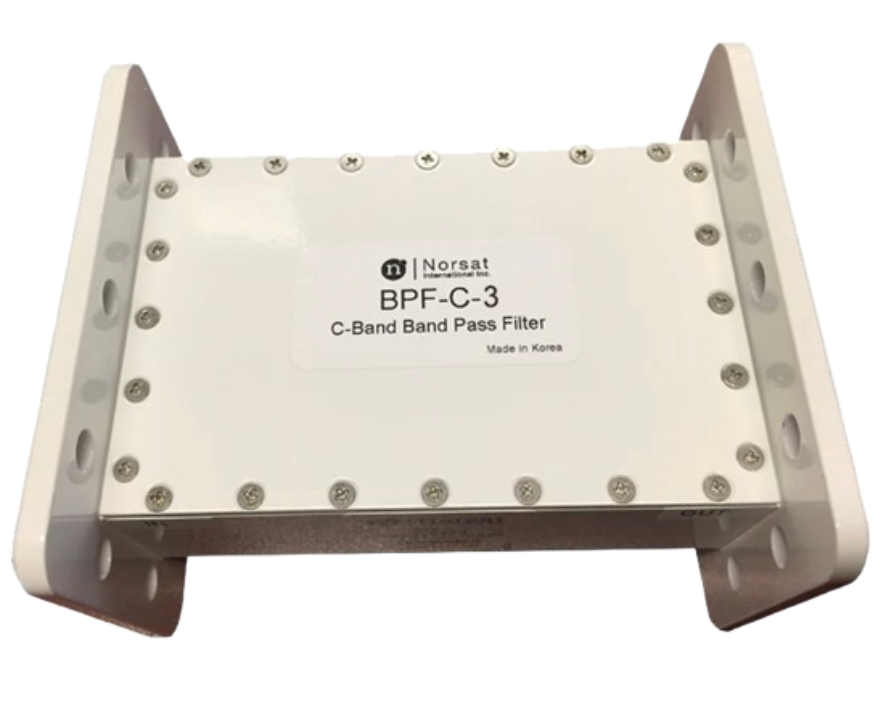
The filter is engineered for simple deployment.
Installation location:
Between feed horn and LNB
Benefits:
This makes retrofits easier for existing satellite systems.
Outdoor installations require durability.
The eBPF-C Series features:
IP66 environmental sealing
This protects against:
Ideal for:
| Parameter | Specification |
|---|---|
| VSWR | 1.4 : 1 max |
| Group Delay Variation | 3.0 ns max |
| Insertion Loss | 1.4 dB max |
| Waveguide | CPR-229G input / CPR-229F output |
| Protection | IP66 |
| Installation | Feed ↔ LNB |
eBPF-C Model Specifications
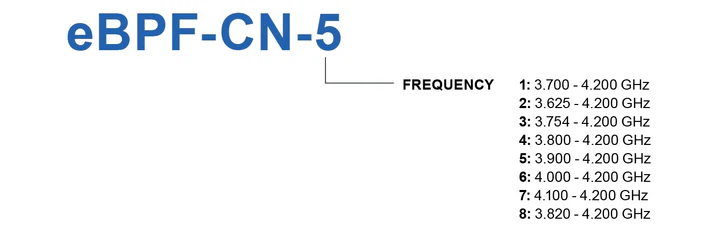
| Model | Frequency Range | Rejection | Dimensions | Weight |
|---|---|---|---|---|
| eBPF-C-1 | 3.70–4.20 GHz | 60 dB @ 3.682 GHz | 185×100×71 mm | <970 g |
| eBPF-C-2 | 3.625–4.20 GHz | 60 dB @ 3.607 GHz | 185×100×71 mm | <970 g |
| eBPF-C-3 | 3.754–4.20 GHz | 60 dB @ 3.736 GHz | 185×100×71 mm | <970 g |
| eBPF-C-4 | 3.80–4.20 GHz | 60 dB @ 3.782 GHz | 185×100×71 mm | <970 g |
| eBPF-C-5 | 3.90–4.20 GHz | 60 dB @ 3.882 GHz | 185×100×71 mm | <970 g |
| eBPF-C-6 | 4.00–4.20 GHz | 60 dB @ 3.982 GHz | 170×100×71 mm | <900 g |
| eBPF-C-7 | 4.10–4.20 GHz | 60 dB @ 4.082 GHz | 160×100×71 mm | <900 g |
| eBPF-C-8 | 3.82–4.20 GHz | 60 dB @ 3.802 GHz | 185×100×71 mm | <970 g |
All models provide 25 dB minimum rejection at 4.230 GHz.
Protects large antenna systems against terrestrial RF contamination.
Preserves signal quality for contribution and distribution.
Ensures higher signal reliability.
Improves service continuity.
Protects sensitive receiving systems.
Reliable outdoor deployment in harsh conditions.
Advantages include:
✔ Excellent 5G rejection
✔ Narrow guard band (<20 MHz)
✔ Low insertion loss
✔ IP66 sealing
✔ Easy installation
✔ Broadcast-grade signal integrity
✔ Compatible with Norsat C-Band LNBs
✔ Multiple frequency variants available

At VSATplus, we provide more than hardware.
Customers receive:
Whether you operate a teleport, enterprise VSAT system, broadcaster, or government communication platform, VSATplus can help identify the correct eBPF-C model for your network requirements.
The Norsat eBPF-C Series C-Band Extreme Band Pass Filter is a critical solution for protecting satellite systems against modern terrestrial interference.
With powerful rejection performance, narrow guard band efficiency, low insertion loss, and rugged environmental protection, the eBPF-C Series delivers dependable signal integrity for professional C-Band satellite environments.
For organizations facing growing interference risks from 5G, radar, or nearby terrestrial transmitters, the eBPF-C Series offers a practical and highly effective mitigation strategy—available now from VSATplus.