UAE: +971 6 55 222 55 | USA: +1 (833) VSAT 123

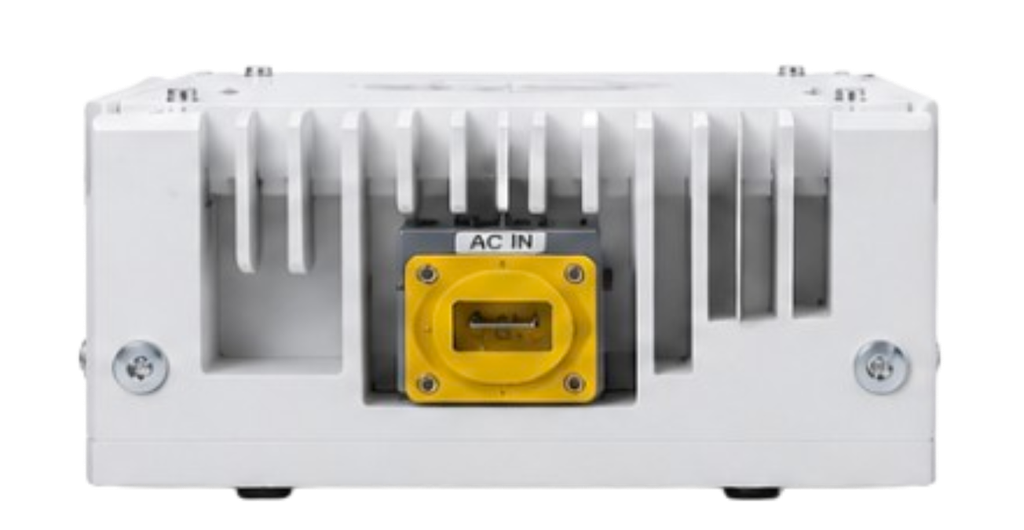
In modern satellite communication networks, the demand for higher transmit power, efficient RF performance, compact equipment, and reliable outdoor operation continues to grow. High-power Block Upconverters (BUCs) are particularly important in VSAT, broadcast, trunking, enterprise, and other satellite applications where the uplink needs to deliver a strong and stable RF signal to the satellite.
The New Japan Radio (NJR) NJT8371 series Universal/Standard Ku-band GaN 40W BUC is designed to address these requirements by combining GaN amplifier technology, 40W saturation output power, high linearity, compact construction, and monitor-and-control capabilities in an outdoor BUC platform.
According to the manufacturer datasheet, the NJT8371 series supports both Standard Ku-band from 14.0 to 14.5 GHz and Universal Ku-band from 13.75 to 14.5 GHz, providing flexibility for different satellite network configurations. The datasheet also specifies a minimum saturation output power of +46 dBm at +25°C, equivalent to approximately 40W.
For organizations looking for professional Ku-band transmission equipment, VSATPLUS offers access to satellite communication products such as the NJT8371 series, making it possible to source the BUC according to the required frequency range, interface configuration, and power arrangement.
The NJT8371 is a high-power Ku-band BUC based on Gallium Nitride (GaN) amplifier technology. A BUC converts the lower-frequency Intermediate Frequency (IF) signal received from a satellite modem into a higher-frequency RF signal suitable for transmission through a satellite antenna.
The NJT8371 is specifically designed as a 40W saturation-output Ku-band BUC. Its nominal linear gain is 72 dB, with a minimum specified gain of 66 dB. The device provides a saturation output power of +46 dBm minimum at +25°C and +45 dBm minimum over the operating temperature range.
The use of GaN technology is particularly significant. GaN RF amplifiers can provide high power density and efficiency, allowing manufacturers to build powerful RF amplifiers in relatively compact packages. NJR’s datasheet specifically identifies “GaN Technology Amplifier Inside” as one of the product’s main features.
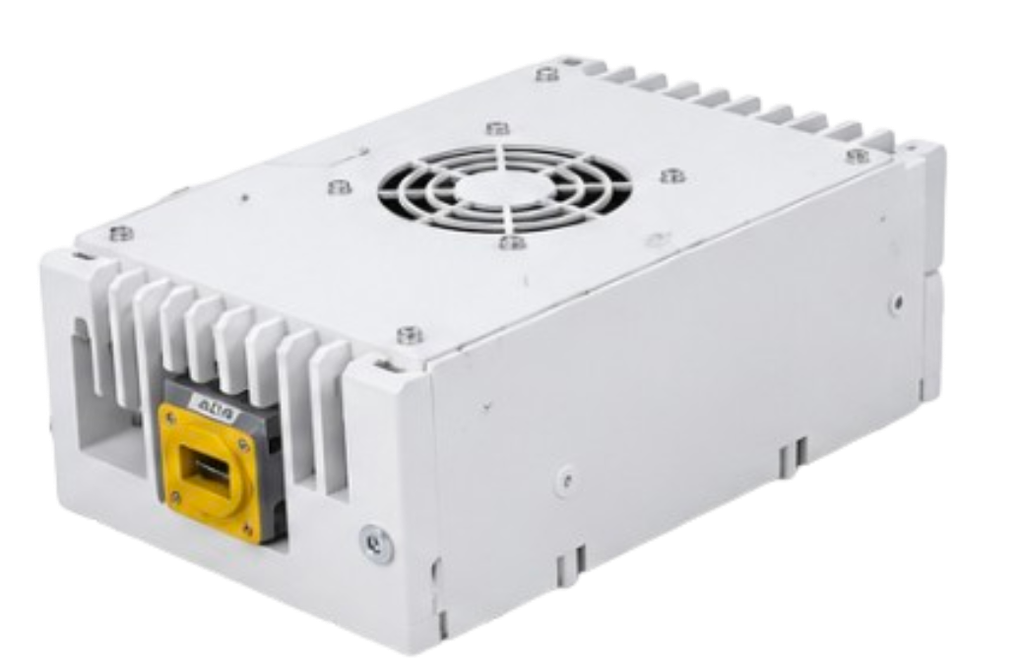
One of the most important characteristics of the NJT8371 is its high RF output power.
The datasheet specifies:
This makes the NJT8371 suitable for satellite systems requiring substantially more transmit power than typical low-power BUC configurations.
The high-power capability can be especially valuable where the satellite link budget requires additional uplink power or where the operator needs to support higher-capacity transmission within the available RF architecture.
The NJT8371 series is available in two major RF frequency configurations.
| Configuration | RF Frequency |
|---|---|
| Standard Ku-band | 14.0–14.5 GHz |
| Universal Ku-band | 13.75–14.5 GHz |
The wider Universal Ku-band configuration provides 750 MHz of RF bandwidth, while the Standard Ku-band version provides 500 MHz.
This flexibility allows network designers to select the appropriate version according to the satellite transponder plan, modem configuration, and network requirements.
The NJT8371 provides a nominal 72 dB linear gain, with a minimum linear gain of 66 dB. This substantial gain enables the BUC to amplify the modem’s relatively low-level IF signal to a high-power Ku-band RF output suitable for satellite transmission.
Gain variation is also specified by NJR:
The specified gain stability over temperature is 2 dBp-p typical and 4 dBp-p maximum.
These specifications are important for professional satellite systems because predictable gain behavior helps maintain stable RF performance across the operating frequency and temperature range.
For high-capacity satellite networks, output power alone is not enough. The transmitter must also maintain appropriate signal quality and minimize unwanted spectral effects.
The NJT8371 specifies:
ACPR: -30 dBc typical / -26 dBc minimum at Pout = +44 dBm.
Adjacent Channel Power Ratio (ACPR) is an important measurement for evaluating how much signal energy extends into neighboring channels. Better ACPR performance can help satellite operators use available transponder bandwidth more effectively while reducing interference with adjacent carriers.
This makes the NJT8371 particularly interesting for applications where both high RF output power and controlled spectral performance are required.
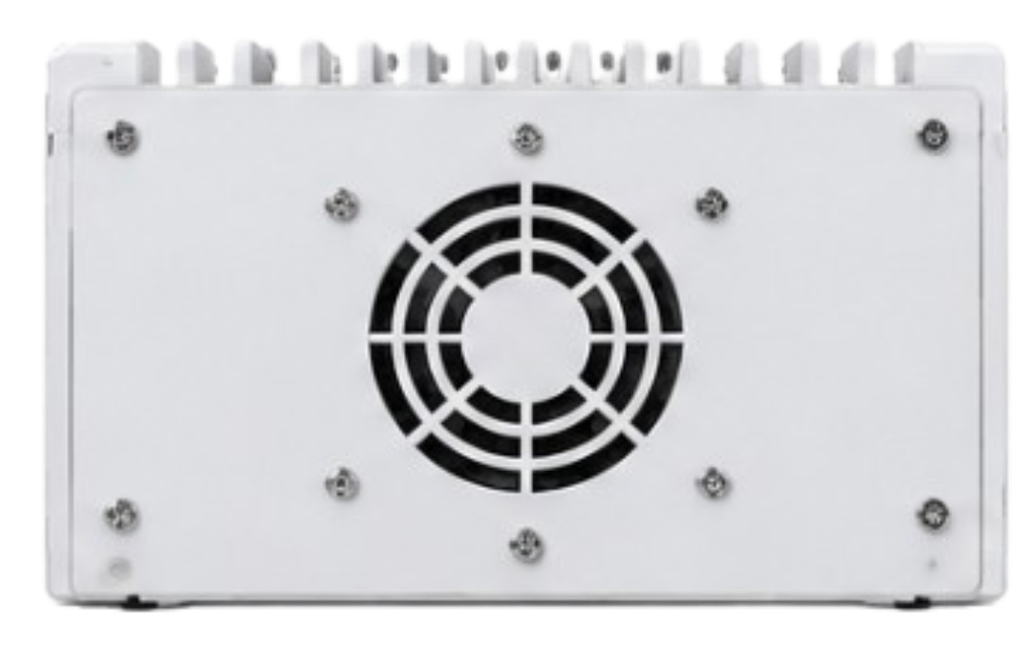
The NJT8371 also provides defined local oscillator phase-noise performance:
| Offset Frequency | Maximum Phase Noise |
|---|---|
| 100 Hz | -60 dBc/Hz |
| 1 kHz | -70 dBc/Hz |
| 10 kHz | -80 dBc/Hz |
| 100 kHz | -90 dBc/Hz |
| 1 MHz | -100 dBc/Hz |
These values are specified by NJR for the local oscillator.
Low phase noise is an important characteristic in satellite transmission because phase instability can negatively affect carrier quality and overall system performance.
The NJT8371 has the following specified input and output VSWR:
| Parameter | Specification |
|---|---|
| Input VSWR | 2:1 maximum |
| Output VSWR | 1.5:1 maximum |
The lower output VSWR specification provides a defined RF interface characteristic between the BUC and the external transmission chain, including the waveguide and antenna system.
The NJT8371 is designed for DC operation and requires a relatively high DC voltage compared with many lower-power BUCs.
Power consumption is specified as:
| Operating Condition | Power Consumption |
|---|---|
| No IF Signal | 120W typical |
| Pout = +44 dBm | 220W typical |
| At Psat | 260W typical |
| Maximum at Psat | 290W |
KuGaN40WBUC_NJT8371_Rev03.pdf
For installations where AC operation is preferred, NJR also specifies an optional outdoor 500W AC/DC power supply.
The optional power supply supports:
The datasheet describes this power supply as an outdoor AC/DC PSU that can be installed alongside the BUC and connected using the appropriate DC power arrangement.

Another major advantage of the NJT8371 is its available Monitor & Control (M&C) functionality.
The datasheet identifies both:
Supported functions include:
For professional networks, this capability can simplify remote equipment management and operational monitoring.
Instead of treating the BUC simply as an RF amplifier, the NJT8371 can become part of a larger network-management architecture.
The NJT8371 incorporates a mute function designed to shut off the HPA under certain reference or oscillator conditions.
According to the datasheet, the BUC will mute/shut off the HPA in case of local oscillator unlock or absence of the 10 MHz reference signal.
This is an important operational feature because a high-power RF amplifier should not continue transmitting normally when the required frequency reference is unavailable.
The NJT8371 is designed for outdoor installation.
The specified environmental ranges are:
| Environmental Parameter | Specification |
|---|---|
| Operating temperature | -40°C to +60°C |
| Storage temperature | -40°C to +75°C |
The wide operating temperature range makes the product suitable for satellite earth-station environments where equipment may be exposed to significant temperature changes.
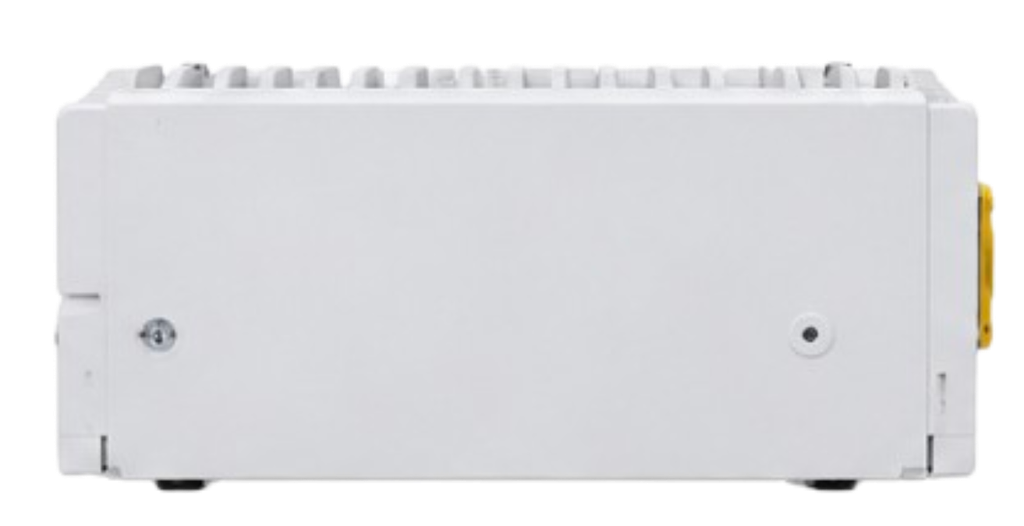
Despite providing 40W saturation output power, the NJT8371 maintains a relatively compact physical footprint.
230 × 150 × 100 mm
The dimensions are specified without the interface connectors and screws.
4.4 kg / approximately 9.1 lb
The compact design is particularly useful for outdoor satellite antenna installations where equipment weight and available mounting space are important considerations.
The following table summarizes the main technical information provided in the NJR datasheet.
| Specification | NJT8371 Series |
|---|---|
| Product type | Universal/Standard Ku-band GaN 40W BUC |
| Technology | GaN amplifier |
| Standard Ku RF frequency | 14.0–14.5 GHz |
| Universal Ku RF frequency | 13.75–14.5 GHz |
| Saturation output power | +46 dBm min. @ +25°C |
| Saturation output over temperature | +45 dBm min. |
| Nominal linear gain | 72 dB |
| Minimum linear gain | 66 dB |
| Gain variation – Standard Ku | 5 dBp-p max. / 500 MHz |
| Gain variation – Universal Ku | 5 dBp-p max. / 750 MHz |
| Gain variation | 2 dBp-p max. / 54 MHz |
| Gain stability over temperature | 2 dBp-p typ., 4 dBp-p max. |
| ACPR | -30 dBc typ., -26 dBc min. @ +44 dBm |
| Input VSWR | 2:1 max. |
| Output VSWR | 1.5:1 max. |
| LO phase noise @ 100 Hz | -60 dBc/Hz max. |
| LO phase noise @ 1 kHz | -70 dBc/Hz max. |
| LO phase noise @ 10 kHz | -80 dBc/Hz max. |
| LO phase noise @ 100 kHz | -90 dBc/Hz max. |
| LO phase noise @ 1 MHz | -100 dBc/Hz max. |
| DC voltage | +36 to +60 VDC |
| Power @ no IF signal | 120W typ. |
| Power @ +44 dBm output | 220W typ. |
| Power @ saturation | 260W typ. |
| Maximum power @ saturation | 290W |
| Mute function | LO unlock / no 10 MHz reference |
| M&C | FSK / RS-232C |
| M&C functions | Power monitor, TX On/Off, alarm, digital step attenuator, etc. |
| Operating temperature | -40°C to +60°C |
| Storage temperature | -40°C to +75°C |
| Dimensions | 230 × 150 × 100 mm |
| Weight | 4.4 kg / 9.1 lb |
All specifications in this table are based on the NJT8371 Rev.03 manufacturer datasheet.
The combination of high output power, Ku-band frequency flexibility, GaN technology, compact construction, and monitoring functions makes the NJT8371 well suited to a variety of professional satellite communication environments.
The NJT8371 can be considered for high-power VSAT terminals and satellite earth stations where additional uplink power is required.
Its Ku-band operation and 40W saturation capability make it relevant to professional satellite networks where RF power is an important part of the link budget.
Enterprise satellite networks can use high-power BUCs for reliable connectivity between remote locations and centralized satellite infrastructure.
The NJT8371’s Universal Ku-band option provides additional frequency flexibility for different satellite network designs.
Satellite teleports and gateway stations can require high-power RF equipment combined with monitoring and control.
The NJT8371’s M&C functions, high gain, and RF performance make it a potential component in such systems.
Satellite broadcast and contribution applications can require carefully controlled RF performance and sufficient uplink power.
The NJT8371’s specified ACPR and phase-noise characteristics provide the technical foundation for systems where signal quality is important.
With an operating range of -40°C to +60°C, the BUC is designed for outdoor environments and can be deployed where satellite equipment must operate through substantial environmental temperature variations.

The strongest advantages of the NJT8371 can be summarized as follows:
High RF Output Power:
40W-class saturation power provides a substantial uplink capability.
GaN Technology:
The integrated GaN amplifier technology supports the high-power, compact design highlighted by NJR.
Flexible Ku-Band Coverage:
Both Standard and Universal Ku-band versions are available.
Strong Gain:
72 dB nominal linear gain provides substantial amplification.
Controlled RF Performance:
Defined ACPR, phase-noise, gain variation, and VSWR specifications support professional RF system design.
Outdoor Operation:
The BUC is specified for operation from -40°C to +60°C.
Monitor & Control:
FSK and RS-232C options provide monitoring and control capabilities.
Protection Through Mute Function:
The HPA can shut down when the LO is unlocked or the 10 MHz reference signal is absent.
Compact Construction:
The 230 × 150 × 100 mm enclosure and 4.4 kg weight offer a practical form factor for high-power equipment.
Optional AC Power Solution:
The 500W outdoor AC/DC PSU provides an option for systems requiring AC-powered operation.
For satellite operators, system integrators, ISPs, teleport operators, broadcasters, and other organizations searching for professional Ku-band RF equipment, the New Japan Radio NJT8371 Universal/Standard Ku-band GaN 40W BUC represents a powerful option for high-power satellite transmission architectures.
VSATPLUS can provide the NJT8371 series for customers looking for this high-power Ku-band BUC, with product configuration and ordering based on the required Standard or Universal Ku-band version and interface/power configuration.
Before ordering, customers should confirm their required RF frequency range, IF configuration, connector type, power arrangement, and Monitor & Control requirements to ensure the correct NJT8371 model is selected.
The NJR datasheet identifies multiple model configurations using N-type or F-type IF connectors, as well as different M&C and power configurations.
For pricing, availability, configuration assistance, and ordering information, contact VSATPLUS and our team can help you identify the appropriate NJT8371 configuration for your satellite communication system.
VSATPLUS — Your Source for Professional Satellite Communication Equipment
The supplied NJR Rev.03 document identifies the NJT8371 series as “Under Development.” Therefore, availability and exact production/configuration status should be confirmed with VSATPLUS before placing an order.

The NJR NJT8371 series Universal/Standard Ku-band GaN 40W BUC combines high RF output power with the flexibility and control features expected in professional satellite communication infrastructure. With +46 dBm minimum saturation output at +25°C, 72 dB nominal linear gain, Standard and Universal Ku-band frequency options, GaN technology, defined ACPR and phase-noise performance, outdoor environmental capability, and FSK/RS-232C monitor-and-control options, the NJT8371 is designed around the requirements of demanding satellite uplink systems.
Its compact 4.4 kg form factor and optional 500W AC/DC power supply further expand its installation flexibility. For VSAT, satellite broadband, teleport, broadcast, enterprise connectivity, and other professional satellite applications, the NJT8371 provides a high-power RF building block capable of supporting demanding Ku-band transmission architectures.
If you are looking for the NJR NJT8371 40W Ku-band GaN BUC, VSATPLUS is available to assist with sourcing, configuration, pricing, and ordering. Contact the VSATPLUS team to discuss your requirements and select the appropriate NJT8371 configuration for your network.