UAE: +971 6 55 222 55 | USA: +1 (833) VSAT 123

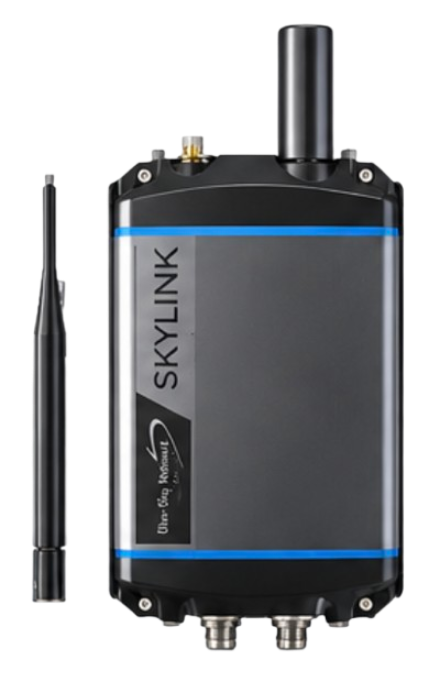
Reliable communication is essential for businesses and organizations operating beyond the reach of conventional telecommunications infrastructure. Whether it is a vessel navigating open waters, an aircraft operating over remote regions, a vehicle traveling through isolated areas, or an industrial facility monitoring equipment in the field, maintaining dependable connectivity can be challenging.
The Iridium Certus 100 is designed to address these challenges by providing compact, low-power, and globally available satellite connectivity. Optimized for Size, Weight, and Power (SWaP), it offers a practical communication solution for applications where conventional satellite equipment may be too large, too heavy, or too power-intensive.
Operating through the Iridium Low Earth Orbit (LEO) satellite network, Certus 100 supports IP data connectivity with speeds of up to 22 Kbps for transmission and 88 Kbps for reception, along with up to two simultaneous high-quality voice lines. These capabilities make it suitable for remote monitoring, workforce communications, telemetry, asset management, and essential operational data transfer.
For organizations looking for a compact satellite communication solution, VSATplus offers the Iridium Certus 100, helping customers identify suitable equipment for their operational requirements.
Iridium Certus 100 is a midband satellite connectivity solution developed for applications with demanding size, weight, and power requirements. It provides IP-based satellite communication and voice services through the Iridium global satellite network.
Unlike traditional satellite systems that may require larger antennas or complex installation arrangements, Certus 100 is designed to support compact and lightweight equipment. This makes it particularly useful for mobile platforms, portable systems, and installations where available space and electrical power are limited.
The service is suitable for vehicles, vessels, aircraft, and fixed or portable installations. It can support communication between remote operational locations and central offices, allowing organizations to exchange important information even when terrestrial networks are unavailable.
Its capabilities include:
One of the main advantages of this solution is its balance between equipment size, power requirements, and communication capabilities. It is not intended to replace high-bandwidth broadband satellite systems. Instead, it provides a dependable connection for applications that need essential data and voice services in locations where connectivity is otherwise difficult to obtain.
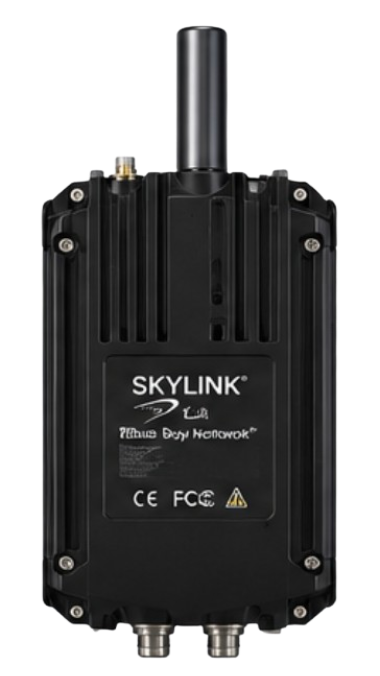
The most important characteristic of Iridium Certus 100 is its optimization for size, weight, and power.
Many mobile and remote applications have strict equipment limitations. Aircraft have weight and space restrictions, vehicles require equipment that can be integrated without occupying excessive space, and remote monitoring stations may depend on limited battery or solar power.
Certus 100 addresses these requirements through a family of compact, lightweight, and power-efficient satellite communication solutions.
This design approach offers several advantages:
For system integrators and equipment manufacturers, these characteristics make Certus 100 a useful connectivity option when designing compact communication systems.
Iridium Certus 100 operates through the Iridium LEO satellite constellation, which provides coverage across the globe, including polar regions.
Unlike geostationary satellite systems that rely on satellites positioned over fixed orbital locations, Iridium uses satellites moving in Low Earth Orbit. Its interconnected satellite architecture and overlapping coverage areas help maintain connectivity as users move between different regions.
This is particularly valuable for:
The global reach of the Iridium network helps organizations maintain communication beyond the boundaries of conventional mobile networks.
Iridium Certus 100 supports IP-based data communication, allowing compatible equipment and applications to exchange operational information over a satellite connection.
Its current service speeds are:
These speeds are suitable for applications that prioritize reliable communication over high bandwidth.
Typical data applications include:
For organizations operating remote equipment, the ability to transmit sensor readings, equipment alerts, and operational reports can be more important than having access to high-speed internet.
In addition to IP data connectivity, Iridium Certus 100 supports up to two simultaneous high-quality voice lines.
This capability is valuable for operations where voice communication is essential for coordination, safety, and decision-making.
For example, a remote operations team may need to communicate with a field technician while maintaining a separate voice connection with a control center.
Having two simultaneous voice lines can provide greater communication flexibility for teams working in demanding environments.
Iridium Certus 100 uses L-band satellite frequencies. L-band communication is valued in mobile satellite applications because it offers resilience to adverse weather conditions compared with higher-frequency satellite systems that can experience more significant rain attenuation.
This characteristic makes the service useful for maritime operations, aviation, transportation, and remote infrastructure.
Weather resilience is particularly important when communication is required during challenging environmental conditions.
Although L-band technology improves resistance to weather-related signal degradation, actual connectivity can still depend on antenna installation, obstructions, local conditions, and network availability.
The Iridium LEO architecture provides a shorter satellite transmission path than traditional geostationary satellite systems.
This helps reduce latency and supports more responsive communication for applications that exchange relatively small amounts of data.
Lower latency can be beneficial for:
For these applications, reducing communication delays can improve operational visibility and response times.
Iridium Certus 100 is designed to support different operational environments.
Depending on the selected terminal and antenna configuration, it can be integrated into:
This flexibility allows organizations to select a suitable hardware implementation without changing the fundamental satellite service class.

The following table summarizes the key technical information available for the Iridium Certus 100 service and the product configuration presented by VSATPlus.
| Category | Technical Specification |
|---|---|
| Product Name | Iridium Certus 100 |
| Manufacturer / Network | Iridium |
| Product Category | Midband Satellite Connectivity Solution |
| Service Type | IP Satellite Data and Voice |
| Satellite Architecture | Low Earth Orbit (LEO) |
| Coverage | Global, including polar regions |
| Operating Frequency Band | L-band |
| Frequency Range | 1616–1626.5 MHz |
| Maximum Transmit Speed | Up to 22 Kbps |
| Maximum Receive Speed | Up to 88 Kbps |
| Voice Capability | Up to 2 simultaneous high-quality voice lines |
| Data Connectivity | IP-based satellite data |
| Network Characteristics | Cross-linked satellites and overlapping spot beams |
| Latency | Lower transmission path compared with GEO systems |
| Weather Resilience | L-band communication |
| Equipment Design | Compact, lightweight, low-power solutions |
| Supported Platforms | Mobile, fixed, and portable applications |
| Typical Applications | Remote monitoring, workforce communication, asset control, telemetry, aviation, maritime, and transportation |
Important technical note: Iridium Certus 100 is a service class supported by compatible terminals from Iridium’s manufacturing partners. Physical dimensions, terminal weight, DC input voltage, power consumption, antenna specifications, interfaces, and environmental ratings vary according to the specific hardware model. These figures should be confirmed against the datasheet for the exact terminal being supplied. They should not be treated as universal specifications for every Certus 100 installation.
One of the strongest advantages of Iridium Certus 100 is its ability to provide satellite connectivity in locations where conventional cellular infrastructure is unavailable.
This is particularly important for maritime, aviation, transportation, and industrial operations.
Organizations can maintain communication with remote teams and equipment without depending entirely on terrestrial network coverage.
The SWaP-focused design makes Certus 100 suitable for applications with limited installation space and power availability.
This is especially useful for aircraft, compact vehicles, portable systems, and remote monitoring equipment.
Combining IP data connectivity with support for two simultaneous voice lines allows organizations to handle different communication requirements through a single satellite service.
Teams can exchange operational data while maintaining voice communication for coordination.
Many remote installations do not require high-speed internet. They require a dependable way to transmit sensor information, receive alerts, and maintain communication with centralized systems.
Certus 100 provides a practical connectivity option for these applications.
Its L-band operating frequency makes the service suitable for environments where weather conditions can affect satellite communication.
This is an important advantage for maritime and outdoor operations.
The availability of compatible terminal solutions for different platforms gives integrators and operators flexibility when planning a satellite communication system.
Integrators can select equipment based on installation space, power availability, antenna requirements, and operational needs.

Ships, offshore support vessels, and remote maritime operations frequently travel beyond cellular coverage.
Iridium Certus 100 can support essential voice communication, operational messaging, telemetry, and remote monitoring.
Potential applications include:
For smaller vessels and systems with limited space, a compact Certus 100 terminal can provide an alternative to larger satellite communication installations.
Aircraft operating over remote regions require dependable communication capabilities.
Certus 100 is designed for aviation-related applications where equipment size, weight, and power consumption are important considerations.
Depending on the selected certified terminal and aircraft integration, applications may include:
For aviation deployments, equipment selection and installation must meet the relevant aircraft certification and regulatory requirements.
Industrial facilities often operate equipment in locations far from conventional telecommunications infrastructure.
Examples include remote energy installations, pipelines, monitoring stations, and isolated infrastructure.
Certus 100 can provide a satellite communication link for transmitting:
This helps organizations maintain visibility over assets that would otherwise be difficult to monitor continuously.
Transportation companies may operate vehicles across large geographic areas, including regions with limited cellular coverage.
Certus 100 can support workforce communications, remote asset monitoring, and operational data exchange.
Potential applications include vehicle status reporting, fleet communication, tracking information, and coordination between drivers and central operations teams.
Emergency response teams often work in areas where terrestrial communication infrastructure is damaged, unavailable, or unreliable.
Satellite communication can provide an additional communication path for field personnel and operational centers.
Certus 100’s voice and IP data capabilities can support essential communication, status reporting, and coordination during emergency operations.
For IoT applications, continuous high-speed internet is not always necessary.
Many connected devices only need to send small amounts of information at regular intervals or when an event occurs.
Certus 100 can support remote IoT deployments that require IP connectivity for:
Its compact and low-power equipment options make it relevant to installations where space and energy consumption are restricted.

The VSATPlus product listing identifies the following items as part of the Iridium Certus 100 offering:
The exact supplied hardware configuration and accessories should be confirmed with the VSATPlus sales team before ordering, particularly when a project requires a specific antenna, mounting arrangement, cable length, or power configuration.
Customers should also consider satellite airtime and service activation. The terminal hardware alone does not automatically provide an active satellite subscription. Appropriate Iridium service arrangements are required to use the network.
Before selecting an Iridium Certus 100 solution, organisations should evaluate several technical and operational requirements.
Data requirements: Certus 100 is designed for low-to-midband data applications. Its 22 Kbps transmit and 88 Kbps receive speeds are suitable for telemetry, messaging, email, and small data transfers, but not intended for bandwidth-intensive applications such as HD video streaming or large-scale file transfers.
Hardware compatibility: Confirm that the selected terminal supports the required Certus 100 service and interfaces with the organization’s existing equipment.
Antenna installation: Antenna placement and an appropriate view of the sky are important for maintaining satellite connectivity. Installation requirements depend on the terminal and application.
Power availability: Check the exact terminal’s DC input requirements and power consumption before installation, particularly for aircraft, vehicles, and battery-powered remote systems.
Airtime and service plans: Confirm the appropriate subscription, data allowance, voice options, and regional service requirements with an authorized Iridium service provider.
Regulatory requirements: Aviation, maritime, government, and other specialized installations may require additional approvals or certified hardware.
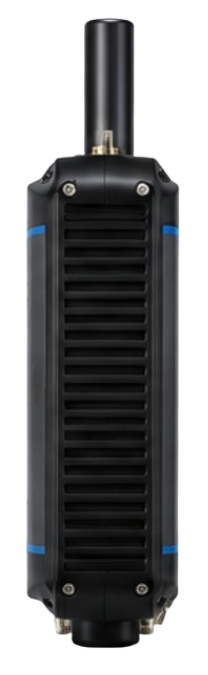
Selecting the right satellite communication equipment is an important part of building a reliable communication system. Customers need to consider not only the satellite service but also hardware compatibility, antenna configuration, installation requirements, and operational requirements.
VSATplus provides the Iridium Certus 100 as part of its satellite communication product portfolio, supporting customers looking for compact and power-efficient global connectivity solutions.
Whether you are planning a maritime communication system, an aircraft installation, a remote monitoring project, or a mobile satellite connectivity solution, VSATPlus can help you explore the available product configuration.
By choosing VSATPlus, customers can:
For organizations that need dependable satellite communication without the size and power requirements of larger broadband systems, Iridium Certus 100 is a solution worth considering.
The Iridium Certus 100 combines compact equipment design, global LEO satellite coverage, IP data connectivity, and support for two simultaneous high-quality voice lines.
Its SWaP-focused architecture makes it suitable for mobile, fixed, and portable applications where reliable communication is essential but equipment space and power are limited.
From maritime and aviation operations to remote monitoring, industrial telemetry, fleet management, and emergency response, Certus 100 provides a practical satellite communication option for organizations operating beyond conventional network coverage.
Looking for Iridium Certus 100 for your next project?
Contact VSATplus to request pricing, confirm availability, and discuss the appropriate configuration for your operational requirements.
Order from VSATPlus:
Website: www.vsatplus.com
Email: sales@vsatplus.com
VSATplus – Your Trusted Source for Satellite Communication Solutions.