UAE: +971 6 55 222 55 | USA: +1 (833) VSAT 123

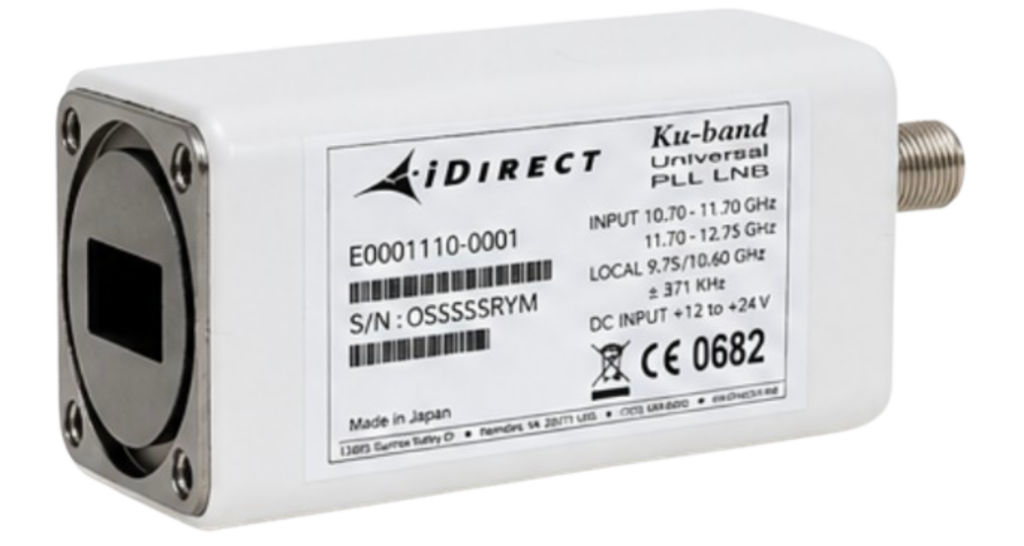
The iDirect NJR2842A1 Universal Ku-Band PLL LNB is a compact, high-stability satellite receiver component designed for Ku-band VSAT and satellite communication systems. As part of the iDirect LNB series, this Universal Ku-band PLL LNB is designed to cover the full Ku-band downlink range from 10.70 to 12.75 GHz, while providing stable L-band output for connection to satellite modems and routers.
The product is particularly suited to iDirect Evolution satellite networks, with the manufacturer specifically recommending the LNB for Evolution carriers down to a minimum of 1 Msps. Its combination of low noise figure, PLL frequency generation, high conversion gain, dual-band operation, and automatic 22 kHz switching makes it a practical choice for professional VSAT installations.
For customers looking to source the iDirect NJR2842A1 for a VSAT deployment, VSATPlus can provide the product and support the procurement process.
An LNB (Low Noise Block downconverter) is one of the critical RF components installed at the antenna feed in a satellite communication system. Its job is to receive the high-frequency signal coming from the satellite, amplify it with a low noise contribution, and convert it to a lower intermediate frequency that can travel through coaxial cable to the satellite modem.
The iDirect Universal Ku-band PLL LNB is designed to handle the 10.70–12.75 GHz Ku-band downlink spectrum. Rather than requiring separate LNBs for different sections of the Ku-band, the Universal design divides the input spectrum into two selectable ranges:
The corresponding L-band outputs are:
The LNB uses different local oscillator frequencies for the two ranges:
This architecture allows the same LNB to support the full specified Ku-band downlink range.
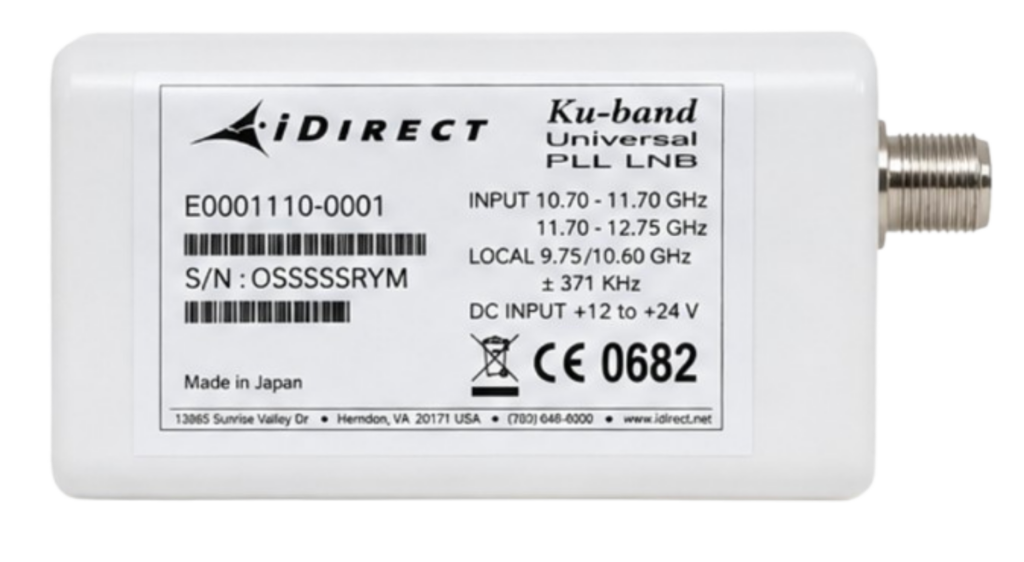
One of the main advantages of the NJR2842A1 is its broad frequency coverage.
The LNB supports the complete specified Ku-band downlink range from 10.70 GHz through 12.75 GHz. This is divided into low- and high-band operation.
| Band | Input Frequency | Local Oscillator | IF Output |
|---|---|---|---|
| Low Band | 10.70–11.70 GHz | 9.75 GHz | 950–1,950 MHz |
| High Band | 11.70–12.75 GHz | 10.60 GHz | 1,100–2,150 MHz |
This makes the product useful for satellite networks operating on different Ku-band frequencies without requiring a separate LNB for each sub-band.
For network operators, this flexibility can simplify equipment selection and field deployment.
The product uses a Phase-Locked Loop (PLL) local oscillator architecture.
Frequency stability is particularly important in satellite communications because the LNB’s local oscillator directly affects the frequency presented to the modem. Excessive frequency drift can make carrier acquisition more difficult and can negatively affect system performance.
According to the datasheet, the local oscillator stability is specified at a maximum of:
±35 ppm
This specification includes the initial setting error and variation across the operating temperature range.
For professional VSAT systems, this level of stability makes the LNB appropriate for demanding carrier reception applications.
The LNB’s noise figure is one of its most important RF specifications.
The iDirect Universal Ku-band PLL LNB specifies:
0.8 dB typical noise figure at 25°C
with:
1.0 dB maximum
A lower noise figure is desirable because the LNB is located at the receiving end of the satellite link, where the incoming signal can be relatively weak.
By keeping additional noise low, the LNB helps preserve the quality of the received satellite signal before it is passed to the modem.
For VSAT networks, this can be particularly important when working with limited link margins or demanding carrier configurations.
The datasheet specifies conversion gain of:
48 dB minimum
and
62 dB maximum
The conversion gain represents the amplification applied to the received satellite signal while converting it from Ku-band to the lower intermediate-frequency range.
The gain level is suitable for typical satellite receiver architectures where the LNB must provide enough signal level for transmission through the coaxial cable and into the satellite modem.
The exact system-level gain requirement will depend on cable length, cable loss, modem input requirements, antenna configuration, and overall RF architecture.

The Auto 22 kHz version, identified in the datasheet as:
P/N: E0001110-0001
supports automatic selection between low and high Ku-band operation.
The LNB uses a 22 kHz tone control, compatible with DiSEqC control.
The specified control characteristics are:
| Parameter | Specification |
|---|---|
| Low Band Control | 0.0–0.2 Vp-p |
| High Band Control | 0.4–0.8 Vp-p |
| Waveform | Square wave |
| Frequency | 22 ± 4 kHz |
| Duty Cycle | 30–70% |
This allows the connected system to select the appropriate frequency range without physically accessing the LNB.
For remotely managed VSAT systems, automatic switching can simplify installation and operation because the required band can be selected through the control signal.
The product family also includes a manual-switch version:
P/N: E0001106-0001
Instead of receiving a 22 kHz control signal, this version uses an external rotary switch.
The datasheet specifies:
This option can be useful in installations where automatic 22 kHz control is not required or where the system architecture calls for manual band selection.
Therefore, customers should confirm whether they require the automatic 22 kHz version or manual-switch version before ordering.
A particularly relevant feature for iDirect users is the manufacturer’s recommendation for Evolution carriers down to a minimum of 1 Msps.
This makes the LNB especially relevant to VSAT operators deploying iDirect Evolution satellite routers and networks.
The combination of:
makes it a suitable RF front-end component for professional satellite connectivity systems.
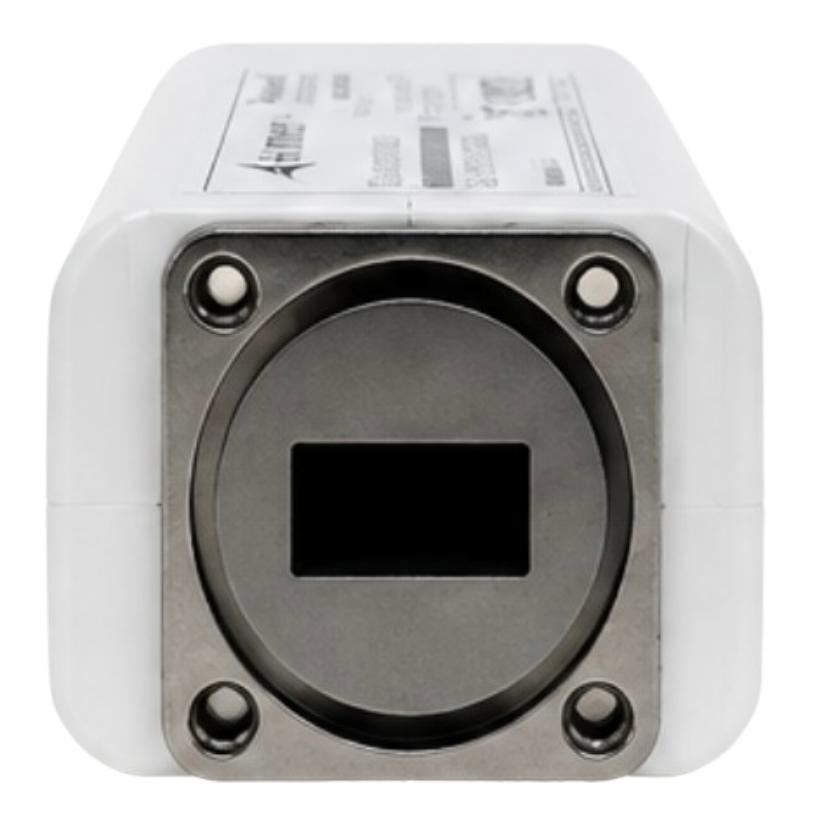
The LNB uses a WR-75 waveguide input interface with groove for connection to the satellite antenna/feed assembly.
On the output side, the unit uses an:
F-Type Female connector
The F-Type output carries both the intermediate-frequency signal and DC power. This means the coaxial connection between the LNB and modem/router can provide the required DC supply while simultaneously carrying the converted satellite signal.
The datasheet identifies the output interface as:
IF Output Connector; DC Supply combined with IF Signal
This is a common and practical architecture for satellite receiving equipment because it reduces the number of required connections between the modem and outdoor RF equipment.
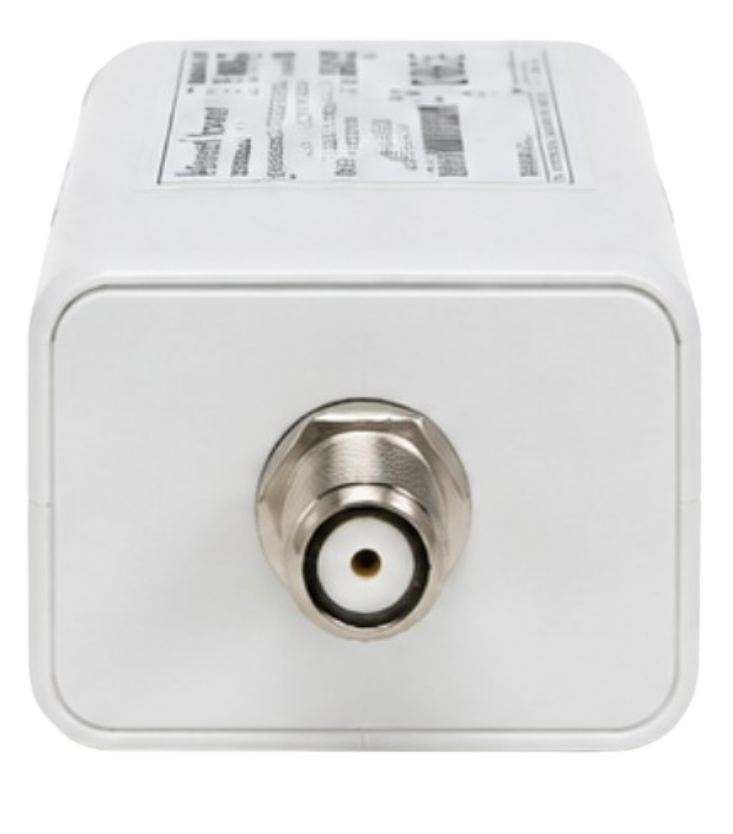
The LNB operates from:
+12 to +24 VDC
The specified current consumption is:
The power is supplied through the IF output connector together with the IF signal.
This relatively straightforward DC power architecture allows the satellite modem or router to power the LNB directly, assuming the modem provides the required voltage and current.
Before deployment, installers should verify that the connected modem or router supports the required LNB supply range.
The iDirect Universal Ku-band PLL LNB is designed as a compact outdoor RF component.
The datasheet specifies two physical configurations.
82.2 × 40 × 40 mm
or:
3.24 × 1.57 × 1.57 inches
83.2 × 42 × 42 mm
or:
3.28 × 1.65 × 1.65 inches
The specified weight is:
210 g / 0.46 lb
These compact dimensions make the LNB easy to integrate into typical Ku-band antenna feed assemblies without adding significant mechanical load to the antenna structure.
Outdoor satellite equipment needs to operate reliably under changing environmental conditions.
The iDirect LNB is specified for an ambient operating temperature range of:
-40°C to +60°C
The storage temperature range is:
-40°C to +80°C
The manufacturer also specifies:
These specifications make the LNB suitable for deployment across a broad range of environmental conditions.
The wide operating temperature range is especially useful for VSAT installations located outdoors, where equipment may be exposed to significant temperature changes during normal operation.
The datasheet lists compliance with:
These certifications and compliance markings are important considerations for organizations purchasing satellite equipment for professional deployments and international projects.
The following table summarizes the principal specifications of the iDirect Universal Ku-band PLL LNB described in the supplied datasheet.
| Specification | iDirect Universal Ku-Band PLL LNB |
|---|---|
| Product Type | Universal Ku-Band PLL LNB |
| Input Frequency – Low Band | 10.70–11.70 GHz |
| Input Frequency – High Band | 11.70–12.75 GHz |
| Total Ku-Band Coverage | 10.70–12.75 GHz |
| Output Frequency – Low Band | 950–1,950 MHz |
| Output Frequency – High Band | 1,100–2,150 MHz |
| Local Oscillator – Low Band | 9.75 GHz |
| Local Oscillator – High Band | 10.60 GHz |
| Conversion Gain | 48 dB min., 62 dB max. |
| Noise Figure @ 25°C | 0.8 dB typ., 1.0 dB max. |
| Local Stability | ±35 ppm max. |
| Image Rejection | 40 dB min. |
| Input VSWR | 2.5:1 typical |
| Output VSWR | 2.3:1 maximum |
| DC Voltage | +12 to +24 VDC |
| Current Consumption | 145 mA typ., 170 mA max. |
| Input Interface | WR-75 Waveguide with Groove |
| Output Interface | F-Type Female |
| Automatic Band Selection | 22 kHz / DiSEqC-compatible |
| Manual Band Selection | External Rotary Switch |
| Operating Temperature | -40°C to +60°C |
| Storage Temperature | -40°C to +80°C |
| Humidity | 0–100% |
| Maximum Altitude | 15,000 ft |
| Weight | 210 g / 0.46 lb |
| Compliance | CE, FCC, RoHS |
| Warranty | 3 years |
| Country of Manufacture | Japan |
The specifications above are taken from the supplied iDirect product documentation.
The LNB specifies a minimum 40 dB image rejection.
Image rejection is important in a frequency-conversion system because unwanted frequency components can potentially interfere with the desired signal.
The datasheet also specifies:
Input VSWR: 2.5:1 typical
Output VSWR: 2.3:1 maximum
These parameters describe the impedance matching performance at the RF input and IF output interfaces.
For satellite system designers, these characteristics are important when integrating the LNB into the complete antenna/feed/modem RF chain.
The most obvious application for the iDirect NJR2842A1 is professional Ku-band VSAT networking.
The LNB can be used at remote satellite terminals to receive Ku-band downlink carriers and convert them to the L-band frequencies required by the satellite modem.
Its compatibility with iDirect Evolution carriers makes it particularly relevant to iDirect-based VSAT networks.
Organizations operating remote offices, branch locations, infrastructure sites, and other locations without reliable terrestrial connectivity can use Ku-band VSAT systems to establish satellite-based communications.
The LNB forms a critical part of the outdoor RF chain in such systems.
The broad operating temperature specification makes the unit suitable for outdoor installations where equipment can experience substantial temperature variation.
Potential environments include:
The specific suitability of the complete system will depend on antenna, modem, satellite, link budget, and environmental requirements.
The Universal Ku-band architecture can also simplify equipment replacement or network upgrades.
Because the unit covers both 10.70–11.70 GHz and 11.70–12.75 GHz, network operators have greater flexibility when selecting Ku-band satellite carriers.

The ability to operate across the complete 10.70–12.75 GHz specified Ku-band downlink range is one of the product’s strongest characteristics.
With 0.8 dB typical and 1.0 dB maximum noise figure, the LNB is designed to minimize additional noise in the receive chain.
The specified ±35 ppm maximum stability supports stable frequency conversion across the specified operating temperature range.
Customers can select between an automatic 22 kHz/DiSEqC-compatible version and a manual-switch configuration.
At approximately 210 g, the LNB adds relatively little weight to an antenna feed assembly.
Operation from -40°C to +60°C supports deployment in demanding outdoor environments.
The manufacturer specifically recommends the LNB for Evolution carriers down to 1 Msps, making it an appropriate consideration for iDirect-based satellite networks.
The supplied documentation states that these products are manufactured in Japan and carry a 3-year warranty.
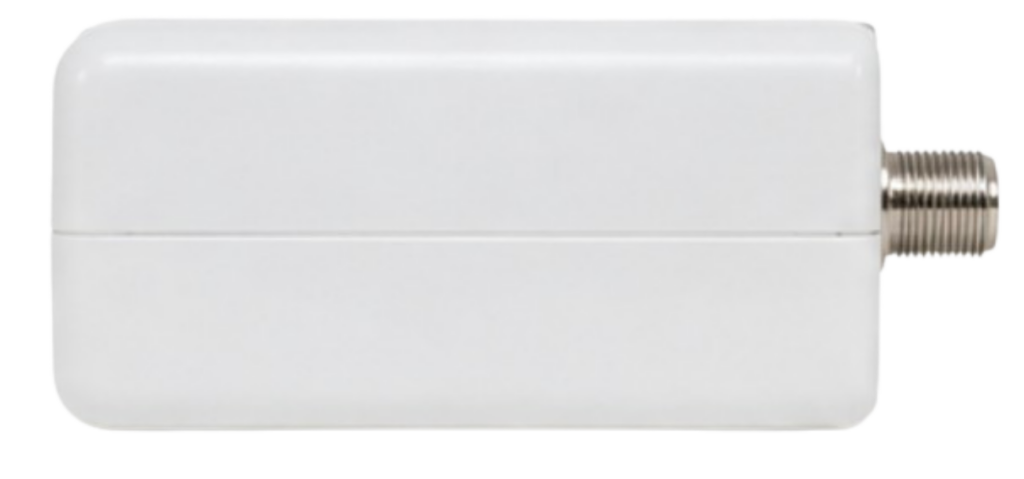
For satellite operators, system integrators, installers, and businesses looking for a professional Ku-band PLL LNB, the iDirect NJR2842A1 Universal Ku-Band PLL LNB provides a combination of broad Ku-band coverage, low noise performance, stable frequency conversion, compact construction, and flexible band selection.
VSATPlus offers this product for customers looking to source iDirect satellite communication equipment.
When requesting the product, customers should specify the required configuration, particularly whether they need the:
This distinction is important because the two versions use different band-selection methods.
For pricing, availability, and ordering information, contact VSATPlus and provide your satellite modem/router model, required Ku-band frequency, and preferred LNB configuration so the appropriate product can be selected.

The iDirect NJR2842A1 Universal Ku-Band PLL LNB is a compact professional-grade RF component designed for Ku-band satellite reception. Its coverage of 10.70–12.75 GHz, combined with 9.75 GHz and 10.60 GHz local oscillators, provides the frequency flexibility required for universal Ku-band operation.
With a 0.8 dB typical noise figure, 48–62 dB conversion gain, ±35 ppm maximum local stability, 40 dB minimum image rejection, and support for automatic 22 kHz band switching, the LNB is engineered for reliable integration into professional satellite communication systems.
Its compact 210 g form factor, WR-75 waveguide interface, F-Type female IF output, +12 to +24 VDC supply requirement, and -40°C to +60°C operating temperature range further support practical outdoor VSAT deployment.
Most importantly for iDirect customers, the manufacturer specifically recommends this LNB for Evolution carriers down to 1 Msps, making it a strong candidate for iDirect-based Ku-band VSAT networks.
The iDirect NJR2842A1 is available through VSATPlus. Contact VSATPlus for pricing, availability, configuration, and ordering.